


Solutions
For Exporters & Importers

For Freight Forwarders and Logistics Service Providers
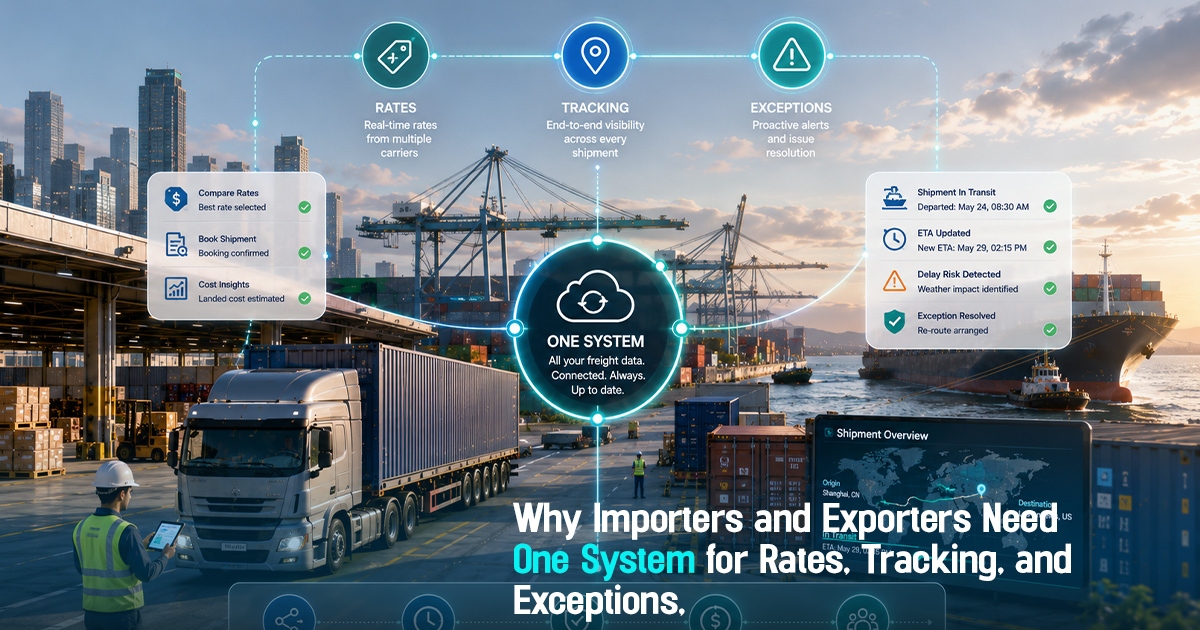
Why Importers and Exporters Need One System for Rates, Tracking, and Exceptions


4 Minutes
A freight tracking and rate management system is critical for importers and exporters to streamline and unify freight operations. Operationally, managing freight rates, shipment tracking, and exceptions through separate tools creates inefficiency, delays, and lack of visibility. Integrating these functions into one system matters because it enhances decision-making, supports proactive exception handling, and reduces risks of costly delays such as detention and demurrage.
What is a freight tracking and rate management system?
A freight tracking and rate management system is an integrated logistics platform that combines freight rate discovery, booking management, shipment visibility, and exception handling into a unified workflow.
This system provides importers and exporters with centralized access to contracted rates, real-time tracking updates, and tools for managing exceptions such as shipment delays or compliance issues. By combining these functions, users gain better control over costs and operations.
Challenges of using disconnected freight systems
Importers and exporters often rely on multiple platforms: one for rate quotes, another for tracking shipments, and possibly manual processes for handling exceptions. This fragmentation leads to information silos and a lack of operational clarity.
Disjointed workflows increase the risk of missed shipment updates, delayed exception responses, and inefficient vendor coordination. These issues can result in higher freight costs, increased detention and demurrage fees, and customer dissatisfaction.

Benefits of integrating rates, tracking, and exception management
An integrated freight management system offers clear advantages: cost control by consolidating freight rates, enhanced shipment visibility, and proactive exception handling to reduce disruptions.
By combining freight procurement into the same platform used for tracking and exception workflows, importers and exporters shorten decision cycles and improve auditability. This unified approach supports comprehensive vendor coordination and timely internal and customer communications.
Centralized freight rate and tracking management reduces delays and improves operational clarity.
Key features to look for in a freight tracking and rate management system
Effective systems should include rate benchmarking, real-time ETD/ETA updates, automated exception alerts, and documentation management. Visibility tools must provide shipment milestone tracking and centralized exception logs.
Additionally, integration with customs and compliance processes ensures reduced operational friction. Practical workflows that enable teams to act quickly on exceptions minimize delays and additional charges.
Practical checklist
Implementing a unified freight tracking and rate management system involves the following steps:
- Assess current freight procurement and tracking tools for gaps and overlaps.
- Identify key operational requirements including exception handling and documentation workflows.
- Choose a system offering integrated rate management, real-time shipment tracking, and exception workflows.
- Plan for data migration and staff training to ensure smooth adoption.
- Monitor key metrics such as exception response times, cost variances, and shipment delays after implementation.
- Continuously improve workflows based on analytics and feedback from shipping teams and vendors.
A structured rollout with clear benchmarks helps embed operational discipline and maximize system benefits.
Common mistakes
A frequent error is underestimating the impact of disconnected systems on operational visibility and exception management. Teams may fail to align procurement and tracking processes, leading to reactive operations and missed cost-saving opportunities.
Another mistake is inadequate user training and change management, which reduces adoption rates and system effectiveness. Overlooking documentation flows and vendor communication touchpoints also disrupts workflows, increasing the risk of compliance issues and delayed shipments.
Comparing shipment visibility and freight tracking software capabilities
While often used interchangeably, shipment visibility provides a broader operational view including status, exceptions, and predictive alerts. Freight tracking software often focuses primarily on location updates and ETA milestones.
Selecting a system that combines tracking with comprehensive exception management and rate integration supports end-to-end operational control, critical for importers and exporters managing complex shipments and multiple vendors.
Integrating centralized freight management for supply chain visibility
Centralized freight management platforms unify all stages of the freight workflow: booking → documentation → visibility → exception handling → delivery control. This workflow ensures consistent data flow and accountability across internal teams and external partners.
Adopting an integrated platform enables importers and exporters to reduce delays, prevent costly exceptions, and optimize freight spend with better vendor negotiations supported by reliable rate data and visibility. Solutions like Frayto's InstaTrac for shipment tracking and exception management demonstrate this model in practice.

Conclusion
Importers and exporters managing freight operations with fragmented tools face increased risks from lack of visibility, slow exception responses, and inflated costs due to disconnected workflows. Implementing a freight tracking and rate management system brings these critical functions into one platform, enabling faster decision-making, improved operational discipline, and enhanced customer service. A unified system reduces delays and non-compliance risks by automating exception workflows and centralizing freight procurement data. Beyond cost control, this approach sustains long-term operational clarity crucial in fluctuating global trade environments. By prioritizing integration and visibility, logistics teams can optimize shipment execution and minimize costly operational disruptions in an increasingly complex freight landscape. Reliable sources such as the World Trade Organization and FIATA emphasize visibility and control as foundational to efficient global freight management.
Get in Touch!
We'll reach out shortly with the info you need. No spam, just a helpful conversation.
Freightstory Technologies Private Limited
A-209, Dynasty Business Park, JB Nagar,
Andheri East, Mumbai- 400059, India


For Exporters & Importers
For Freight Forwarders
© 2026 Frayto. All Rights Reserved.