


Solutions
For Exporters & Importers

For Freight Forwarders and Logistics Service Providers
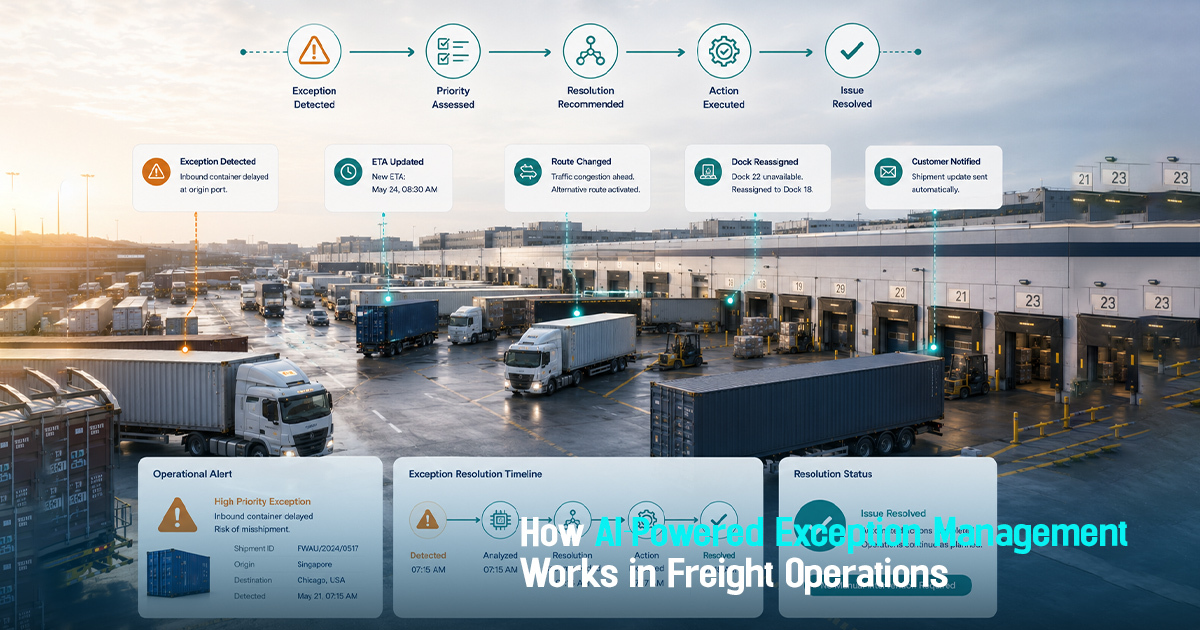
How AI in Freight Operations Streamlines Exception Management


3 Minutes
AI in freight operations refers to the use of artificial intelligence technologies to optimize and automate various logistics processes, particularly exception management. This focus on managing exceptions effectively is operationally critical because it reduces delays, minimizes extra costs like detention and demurrage, and improves overall shipment reliability. However, many freight operations teams still struggle with inconsistent exception handling workflows and limited real-time visibility, which hinder timely decisions and increase operational risk.
What is AI-powered exception management in logistics?
AI-powered exception management combines machine learning algorithms and real-time data analysis to detect, prioritize, and resolve disruptions in freight operations automatically.
It enables logistics teams to anticipate shipment delays, documentation discrepancies, and vendor issues faster than traditional manual monitoring, thereby supporting proactive workflows and operational resilience.
Key components of AI in freight operations
AI integration relies on data inputs from multiple sources such as shipment tracking systems, carrier updates, customs notifications, and procurement records.
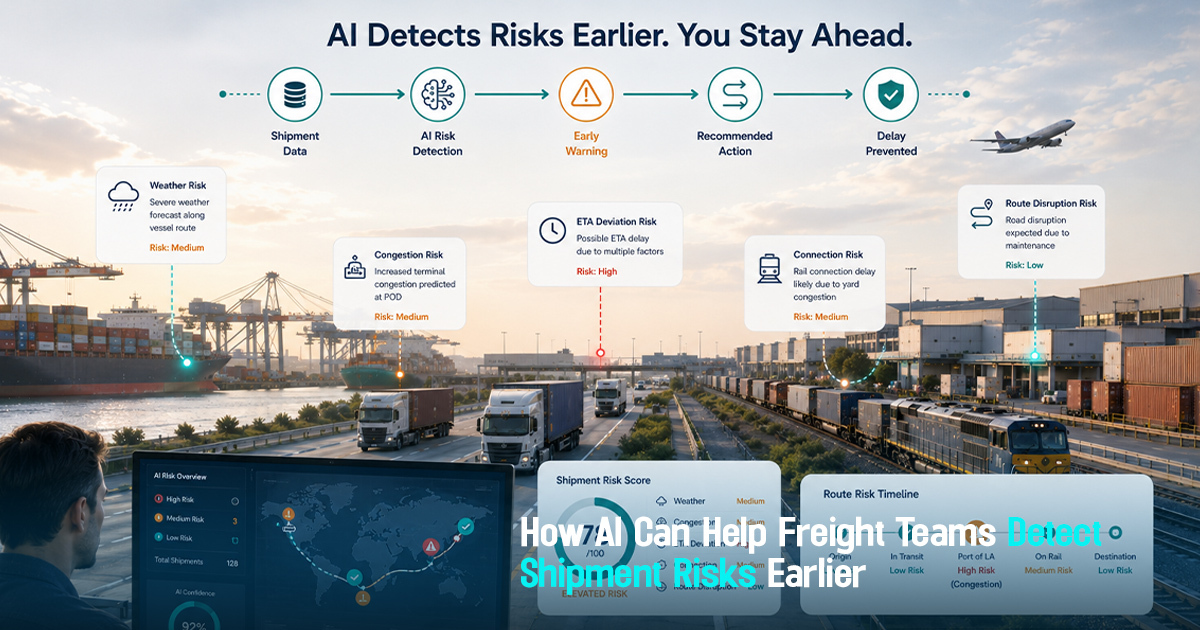
These data streams feed AI models that perform pattern recognition, anomaly detection, and predictive analytics to flag exceptions before they escalate into costly disruptions, reinforcing visibility and control across freight workflows.

How AI improves exception handling workflows
Using AI reduces the dependency on manual shipment monitoring and reactive issue resolution by enabling automated alerting and prioritization of freight exceptions in real time.
This leads to faster identification of risks like documentation delays, customer communication gaps, and vendor follow-ups—helping teams focus on high-impact exceptions and streamline decision-making with precise, data-driven insights.
AI shifts freight exception management from reactive firefighting to proactive problem-solving with better clarity.
Operational workflow for AI-enabled exception management
Effective AI-driven workflows integrate multiple freight operation stages: booking, document validation, monitoring, exception detection, vendor coordination, and delivery control.
By embedding AI at key checkpoints, teams can maintain consistent compliance discipline and reduce delays caused by missing paperwork, customs holds, or shipment reroutes.
Workflow framework: Booking → Documentation → Real-time Monitoring → Exception Detection → Vendor Coordination → Delivery Control
Practical checklist
Implementing AI-powered exception management involves:
- Collecting comprehensive data from shipment tracking, carrier updates, and procurement systems
- Integrating AI tools capable of anomaly detection and predictive analytics
- Setting up automated alerts for prioritized exceptions based on impact
- Ensuring seamless communication channels among freight forwarders, vendors, and customers
- Establishing clear roles for handling exceptions and escalation procedures
- Regularly reviewing AI model accuracy and operational outcomes
This checklist helps maintain structured exception handling and continuous process improvement in freight operations.
Common mistakes
A frequent issue is relying solely on manual tracking and reactive responses, which leads to missed exceptions and delayed corrections, increasing risks of detention and demurrage.
Another mistake is poor integration of AI tools with existing freight systems, causing data silos, low alert accuracy, and unclear accountability for exception resolution, which impairs overall operational clarity.
AI freight tracking vs traditional monitoring
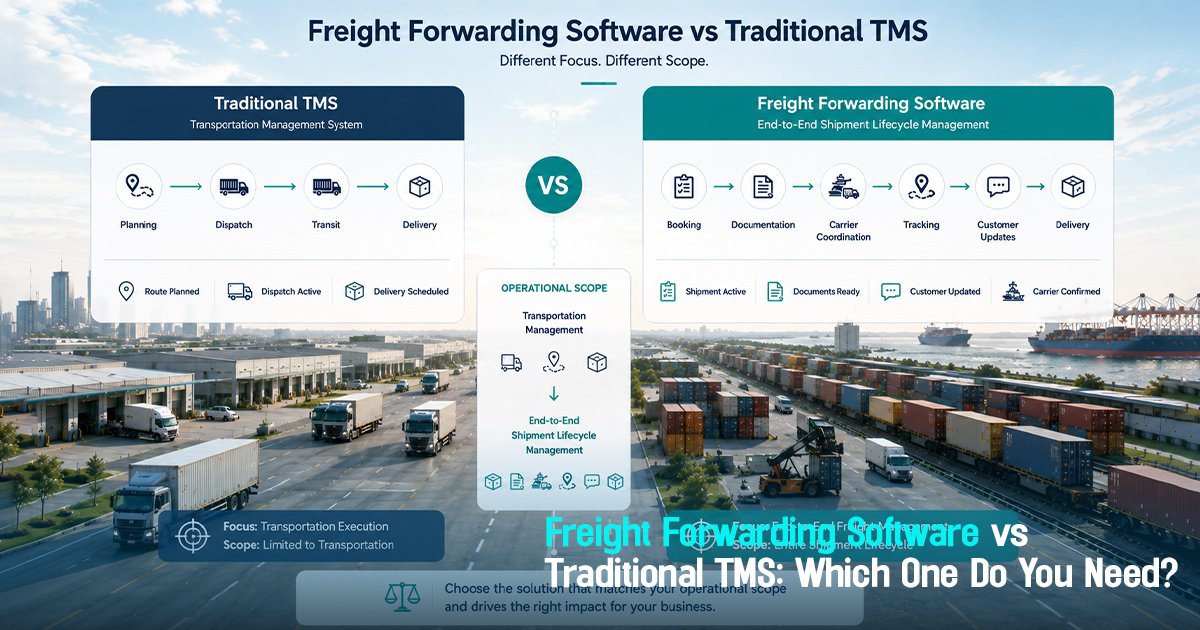
Traditional monitoring depends heavily on manual updates and separate systems for tracking, often causing lag and visibility gaps.
In contrast, AI freight tracking provides continuous, automated insights by analyzing multiple data streams, enabling real-time exception detection and reducing operational blind spots.
This differentiation supports more agile freight operations and helps supply chain teams reduce costly delays and customer dissatisfaction.

Conclusion
Implementing AI in freight operations is a practical step toward transforming exception management from a reactive burden into a proactive capability. It requires disciplined data integration, clear workflows, and continuous review to unlock reliable operational visibility and cost control. With AI-driven exception handling, freight teams can reduce manual workload, improve event prioritization, and maintain compliance with shipment and documentation standards. This shift enhances decision-making speed and accuracy while minimizing risks like detention and demurrage. For logistics teams aiming to improve real-time visibility and streamline operations, applying AI technologies offers measurable benefits. Adopting AI should be matched with strong process discipline and clear vendor coordination to fully realize its potential in reducing disruptions and maintaining smooth freight movement. This balanced approach integrates technology with practical operational needs to deliver consistent improvements in freight management and supply chain resilience.
Get in Touch!
We'll reach out shortly with the info you need. No spam, just a helpful conversation.
Freightstory Technologies Private Limited
A-209, Dynasty Business Park, JB Nagar,
Andheri East, Mumbai- 400059, India


For Exporters & Importers
For Freight Forwarders
© 2026 Frayto. All Rights Reserved.