


Solutions
For Exporters & Importers

For Freight Forwarders and Logistics Service Providers
How to Connect Freight Procurement With Shipment Execution Effectively


4 Minutes
The freight procurement process is the series of steps freight forwarders and logistics teams use to secure transportation services that meet cost, service, and compliance requirements. Operationally, connecting procurement effectively to shipment execution is critical to ensure timely dispatch, avoid cost overruns, and maintain clear visibility across all freight movement stages. However, many organizations struggle to bridge the gap between procurement cycles and real-time shipment handling, leading to delays, exceptions, and inefficient vendor coordination.
Defining the Freight Procurement Process
Freight procurement process refers to acquiring contracted transportation capacity following specific requirements around price, transit time, and service quality. Integrating procurement with shipment execution means aligning these contracts and rate agreements directly into operational workflows for booking, tracking, and compliance.
This alignment improves control over rates, reduces manual invoice reconciliation, and enables faster exception handling by applying procurement terms directly to shipments. Procurement strategies that remain separate from execution often cause inefficient vendor communication and fragmented visibility.

Why Integration Matters for Supply Chain Freight Management
Coordinating freight procurement strategies with shipment execution ensures operational readiness and cost predictability. When procurement teams negotiate contracts without integration, shipment operations may lack clarity on rate validity, service scope, or documentation requirements.
Conversely, a tightly linked process establishes automated rate application, planned booking workflows, and faster carrier follow-up. This reduces the risk of detention and demurrage through clearer service level agreements visibility and helps operations teams prioritize exceptions based on contract terms.
Key Challenges in Aligning Procurement and Shipment Execution
A common obstacle is the disconnect between the procurement cycle, which is often quarterly or annually, and the daily fluidity of shipment operations. Procurement teams focus on competitive bidding and contract negotiation, while operations require real-time tracking, booking adjustments, and exception response.
This disconnect causes gaps such as shipment visibility blind spots, frequent manual rework for rate confirmation, delayed documentation approvals, and fragmented vendor coordination. Moreover, unlinked procurement data limits auditability of freight spend and complicates compliance monitoring.
Connecting procurement and shipment execution sharpens focus on cost control and operational clarity.
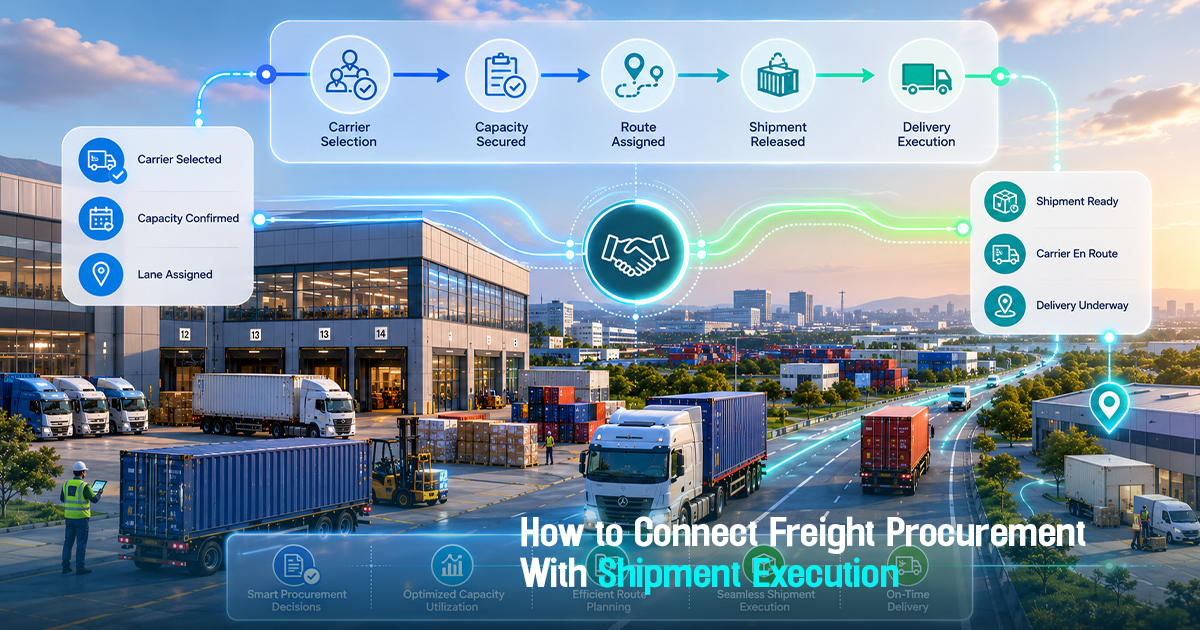
How to Connect Procurement With Shipment Execution: A Practical Workflow
A structured workflow bridging procurement with shipment execution creates operational visibility and reduces risk. Begin by embedding digital freight procurement tools that integrate rate agreements and contract KPIs into shipment booking platforms.
Follow these steps for effective coordination:
Procurement and Shipment Coordination Workflow:
- 1. Finalize freight contracts with detailed service levels and rates
- 2. Integrate contracts into shipment booking systems to enable auto-rate recognition
- 3. Trigger carrier bookings aligned with negotiated timelines and documentation rules
- 4. Monitor shipment progress with real-time tracking linked to contract milestones
- 5. Flag exceptions such as delays or detention risk for prioritized follow-up
- 6. Use procurement data for freight spend audit and continuous improvement feedback
This workflow strengthens communication between procurement and operations teams, enabling faster decision-making and execution discipline. It also supports comprehensive compliance checks across carriers and ensures cost control through pre-agreed rates.
Practical checklist
Implementing procurement and shipment integration requires attention to these key areas:
- Ensure all freight contracts include explicit service level agreements and penalty clauses
- Use procurement platforms that support direct integration with booking and tracking systems
- Maintain a centralized repository of contract documents accessible to operations teams
- Implement exception-first workflows to identify and resolve shipment deviations quickly
- Schedule regular coordination meetings between procurement and operations to address issues
- Train staff on digital tools for procurement and shipment management integration
- Track freight spend and audit carrier performance continuously for process improvement
Common mistakes
A frequent error is treating procurement and shipment execution as isolated functions. This leads to delayed documentation approvals and inconsistent communication, increasing detention and demurrage exposure.
Other pitfalls include relying on manual rate entry during bookings, ignoring exception triggers from procurement KPIs, and inadequate vendor follow-up protocols. These mistakes cause inefficiencies, cost leakage, and poor customer service.
Benefits of integrated logistics procurement
Linking procurement closely with shipment execution delivers clear operational and financial benefits. It facilitates more accurate shipment planning based on contracted capacity and conditions, reducing rework and improving ETA reliability.
From a cost perspective, integration allows audit-ready freight spend reporting and enforcement of negotiated rates, which limits unexpected charges. It also boosts customer communication by having a single source of truth for status updates and contract terms.

Conclusion
Connecting the freight procurement process with shipment execution is vital for controlling costs, ensuring compliance, and maintaining operational visibility. When procurement and operations work in silos, the risk of miscommunication, hidden costs, and shipment delays rises significantly. By adopting structured workflows and leveraging digital tools that integrate contract terms directly into booking and tracking, logistics teams can enforce service levels consistently and respond swiftly to exceptions. This results in better vendor coordination, reduced detention and demurrage risks, and more reliable supply chain freight management. Supply chain and operations managers should prioritize integration to improve decision-making based on real-time data, optimize freight spend auditability, and ultimately enhance customer satisfaction through transparent communication and on-time delivery performance. The ongoing collaboration strengthens both procurement and execution functions for smoother freight movement and fewer costly disruptions. Effective integration is no longer optional but a core component of robust freight management.
For more operational insights, consider referencing industry best practices and standards from organizations like the International Federation of Freight Forwarders Associations, the US Customs and Border Protection, and the United Nations Conference on Trade and Development.
Get in Touch!
We'll reach out shortly with the info you need. No spam, just a helpful conversation.
Recommended Blogs
Freightstory Technologies Private Limited
A-209, Dynasty Business Park, JB Nagar,
Andheri East, Mumbai- 400059, India


For Exporters & Importers
For Freight Forwarders
© 2026 Frayto. All Rights Reserved.