


Solutions
For Exporters & Importers

For Freight Forwarders and Logistics Service Providers
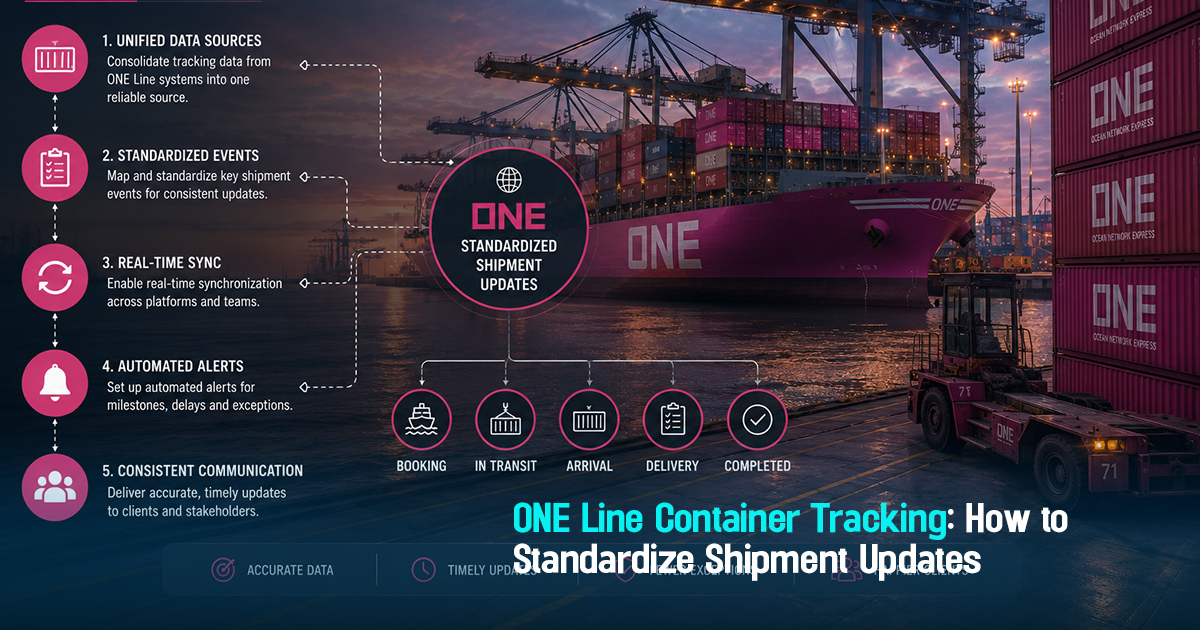
ONE Line Container Tracking: How to Standardize Shipment Updates for Operational Clarity


7 Minutes
Container tracking systems form the backbone of modern shipment visibility, enabling freight teams to monitor cargo movements effectively and standardize shipment updates across stakeholders. Operational clarity hinges on consistent and reliable shipment information from shipping lines, which helps reduce delays, improve customer communication, and minimize risks like detention and demurrage. This article explains practical methods to establish ONE line container tracking and standardized shipment updates, ensuring real-time shipment monitoring drives actionable decisions in freight operations.
What Are Container Tracking Systems and Why Standardization Matters
Container tracking systems refer to technologies and workflows that provide real-time visibility and status updates on shipping containers throughout their transit. Standardize shipment updates means harmonizing these alerts across various carriers and operational teams for uniformity and reliability.
Without standardized shipment updates from shipping line tracking tools, freight teams often face incomplete or inconsistent freight status updates. This causes operational inefficiencies, reactive exception handling, and confused customer communication. A unified container tracking system ensures that vessel ETAs, container milestones, and transport exceptions are reported consistently — essential for operational control in global container tracking.
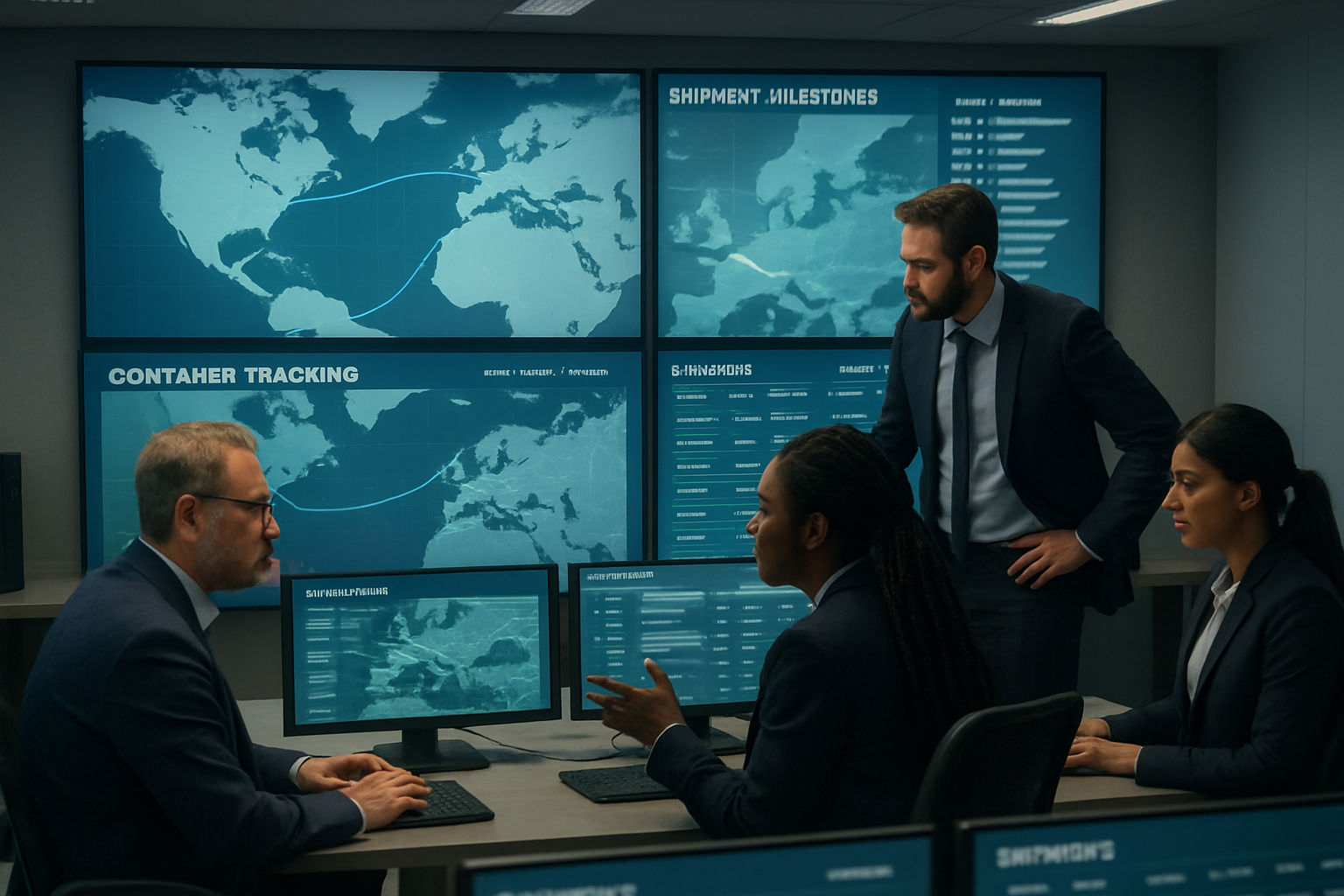
A Practical Workflow for ONE Line Container Tracking and Update Standardization
Implementing standardized shipment updates can be approached through this workflow: Carrier Data Integration → Milestone Mapping → Centralized Monitoring → Exception Flagging → Timely Customer Updates → Audit Trail Maintenance. Each step enhances shipment visibility and reduces operational friction.
First, integrate data from primary shipping line tracking systems to get accurate container movements. Then standardize milestone names and times across carriers. Centralized monitoring groups all shipments in a control tower view, allowing teams to flag exceptions immediately. This triggers proactive customer communication and documentation updates, with every event logged for auditability and continuous process improvement.
Why Freight Teams Struggle with Shipment Update Standardization
Many freight forwarders and operations teams deal with multiple carrier portals, each with different terminology and timing for container tracking milestones, creating visibility gaps. This variability disrupts ETA/ETD monitoring and delays exception handling. For example, a shipment delayed in transshipment may not trigger a timely update due to inconsistent milestone standards.
Similarly, exporters reporting cargo status to customers often rely on manual consolidation from disparate data sources. Without standardization, customer updates become unreliable, leading to escalations and trust issues. Erratic shipment visibility also inflates demurrage and detention risks, as late alerts prevent timely action.
Standardization by Role: Responsibilities and Focus Areas
Freight Forwarders: Coordinate container tracking data from multiple shipping lines, ensure carrier milestones match internal naming, and assign ownership for exceptions. They must centralize freight status updates to avoid siloed information.
Importers & Exporters: Monitor shipment milestones proactively, request standardized updates from partners, and validate ETD/ETA changes. Clear visibility into cargo progress helps plan customs clearance and inbound logistics.
Operations Teams: Track milestones daily, flag anomalies, and follow up with carriers on updates. Utilize standardized shipment statuses to reduce reliance on emails and phone calls.
Procurement/Documentation Teams: Use consistent container tracking data to confirm booking execution and align documentation handoffs with shipment progress, avoiding delays in customs or delivery.
Before, During, and After Shipment: A Stage-Wise Implementation Guide
Before Shipment: Confirm that container tracking systems are aligned with chosen carriers, standardize milestone definitions, and ensure contracts include shipment update requirements.
During Shipment: Centralize real-time updates from shipping lines, verify milestone completion, assign exception owners immediately when anomalies arise, and communicate ETA/ETD changes proactively to customers.
After Shipment: Review the accuracy and completeness of container tracking data for auditability, analyze exception causes, and update workflow standards to improve next cycles.
Operational clarity in freight depends on standardized, real-time container tracking with proactive exception handling.
Practical checklist
Use this checklist to ensure container tracking systems support standardized updates effectively:
- 1. Are all major shipping lines integrated into a single visibility platform?
- 2. Are shipment milestones normalized with common standardized terms?
- 3. Is milestone status monitored and updated in real-time with carrier data?
- 4. Are exceptions immediately flagged and assigned to an owner for action?
- 5. Are ETD and ETA monitored daily and updated proactively to operations and customers?
- 6. Are detention and demurrage risk signals visible from tracking updates?
- 7. Are customer communication templates aligned with shipment tracking milestones?
- 8. Are documentation handoffs triggered based on container arrival and departure events?
- 9. Is there an audit trail capturing shipment status changes and exception resolutions?
- 10. Are follow-ups with carriers centralized to avoid missed updates?
Common mistakes
Mistake 1: Relying on disparate portals for container tracking data without integrating or standardizing leads to visibility gaps and reactionary operations. Fix: Consolidate carrier data into a single platform that maps and normalizes milestones.
Mistake 2: Using inconsistent milestone naming causes confusion across teams and customers, preventing rapid decision-making. Fix: Define a standard milestone glossary and ensure all updates follow it.
Mistake 3: Delayed flagging of exceptions when shipment status deviates leads to escalations and cost overruns. Fix: Employ automated exception detection and assign owners immediately.
Mistake 4: Customer updates sent only after escalation reduce trust and increase follow-ups. Fix: Establish proactive, milestone-based customer communication workflows.
Mistake 5: Documentation handoffs not linked to shipment milestones result in customs delays. Fix: Synchronize document workflows with container arrival and departure milestones for timely clearance.

Frayto-Aligned Workflow for Standardized Container Tracking and Updates
Consider this workflow aligned with Frayto's approach: Carrier Integration → Milestone Normalization → Centralized Shipment Dashboard → Exception Detection → Owner Assignment → Customer Communication → Documentation Handoff → Audit & Feedback. This structured flow ensures shipment visibility is actionable and exceptions are handled before escalating.
Each stage links operational data with communication and documentation control. For instance, automated milestone updates trigger document validation tasks and customer alerts, while exception signals prompt carrier coordination. This creates a tight execution loop that strengthens control over container tracking systems and standardizes freight status updates into decision-ready information.
Real-World Examples of Benefits from Standardized Container Tracking
Example 1: A freight forwarder managing ocean freight from Asia to Europe centralized shipping line tracking data across multiple carriers, reducing missed milestone updates by 40%. This improved ETA predictions and sped up exception resolution.
Example 2: An importer using standard container tracking systems synchronized milestones with customs documentation handoffs, enabling early problem detection and avoiding demurrage charges worth thousands.
Example 3: An exporter standardized shipping line tracking updates for customers via automatic status emails based on container milestones, reducing customer follow-ups by 60% and increasing trust in delivery timelines.
How to Manage Shipping Line Tracking Differences Effectively
Shipping lines vary in how they define milestones like "Loaded on Vessel" or "Container Gate-In." Effective standardization starts with mapping these terms into one company-wide milestone dictionary. Compare carrier data fields, reconcile differences, and implement middleware or software to normalize updates.
Teams should also establish escalation triggers for missed milestones by expected ETD/ETA windows. Routine carrier follow-ups can then be based on known gaps rather than random checks, reducing manual work and improving visibility accuracy.Why Container Tracking is a Must for Freight Forwarders explains carrier burden reduction via tracking system standardization.
Choosing and Implementing Shipment Tracking Technology for Container Visibility
Selecting the right shipment tracking technology is essential for container tracking systems to support standardized updates. Ensure the platform consolidates multiple shipping line tracking feeds, supports milestone customization, offers exception-first alerts, and enables customer communication triggers.
Implementation should involve cross-functional teams including operations, IT, procurement, and customer service to align system configurations with workflow needs. Regular audits of tracking data quality and update timeliness avoid information decay. Integration with documentation control systems ensures shipment progress aligns with customs and delivery readiness.How to Turn Shipment Tracking Technology into Operational Decisions provides further operational focus on technology use.
Conclusion
ONE line container tracking through standardized shipment updates is a critical pillar for operational clarity and efficiency in global logistics. By harmonizing carrier milestone data, centralizing visibility, and instituting exception-first workflows, freight teams avoid delays, reduce cost exposure to detention and demurrage, and strengthen trust in customer communications. The ability to track, flag, and act on container status in real-time equips logistics operations to move from reactive firefighting toward proactive shipment control. Operations managers, freight forwarders, and importers/exporters must drive shipment tracking technology implementation tightly linked to documentation handoffs and freight management workflows. Structured visibility creates decision-ready data that reduces follow-ups and boosts process discipline. Adopting such best practices fosters a clearer, more reliable global container tracking capability — a true operational necessity in competitive freight markets.
Get in Touch!
We'll reach out shortly with the info you need. No spam, just a helpful conversation.
Recommended Blogs
Freightstory Technologies Private Limited
A-209, Dynasty Business Park, JB Nagar,
Andheri East, Mumbai- 400059, India


For Exporters & Importers
For Freight Forwarders
© 2026 Frayto. All Rights Reserved.