


Solutions
For Exporters & Importers

For Freight Forwarders and Logistics Service Providers
How to Track HBL Shipments Without Asking the Carrier Again and Again


8 Minutes
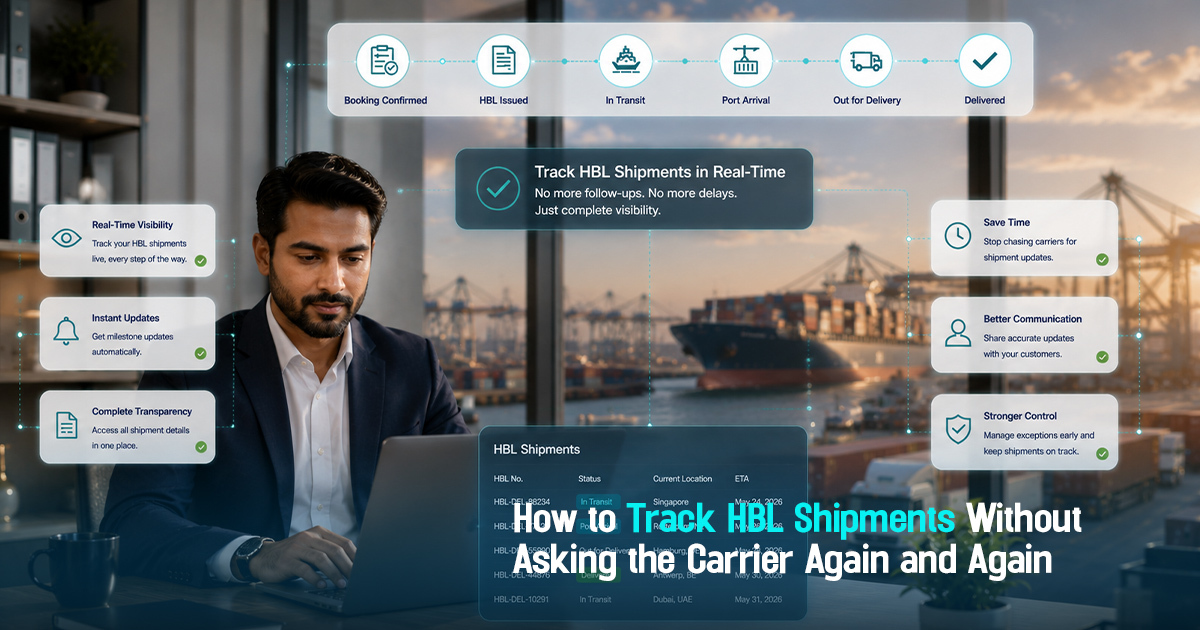
HBL shipment tracking refers to the process of monitoring shipments by their House Bill of Lading numbers rather than just the Master Bill. This is crucial because the HBL level provides granular visibility into individual shipments within consolidated cargo, especially in multimodal and LCL movements. Operationally, relying solely on carriers for frequent HBL status updates creates inefficiencies, delays, and communication gaps. This article explains practical methods to track HBL shipments effectively without repetitive carrier follow-ups, emphasizing structured shipment visibility and centralized control frameworks.
What Is HBL Shipment Tracking and Why It Matters
HBL shipment tracking involves monitoring cargo movement using the House Bill of Lading (HBL) numbers, which are assigned by freight forwarders or consolidators. This tracking granularity is essential for managing shipments that are part of larger Master Bill of Lading (MBL) consignments. Unlike MBL tracking, which covers broad vessel or container movements, HBL tracking provides detailed insights on the individual shipment's status, handling, and documentation.
Without systematic HBL tracking, importers, exporters, and logistics teams encounter frequent blind spots around cargo status, increasing the need for repeated carrier follow-ups and risking missed milestones like ETA changes, customs clearance, and delivery deadlines. Effective HBL tracking reduces such operational friction by enabling centralized shipment visibility and adding exception handling focus to daily workflows.
A Practical Workflow Framework for Tracking HBL Shipments
Implementing a structured workflow for HBL shipment tracking helps avoid repetitive manual follow-ups and supports timely decision-making. The following framework outlines key stages:
1. HBL Data Capture: Capture and enter HBL numbers and associated shipment details into centralized tracking systems as soon as the booking is confirmed. This procurement control ensures no shipment is missed at the outset.
2. Master and Sub-Shipment Cross-Reference: Link HBLs to their MBLs and corresponding vessel or flight ETD/ETA for consolidated visibility. This cross-referencing anchors HBL tracking in broader shipment context, reducing guesswork.
3. Automated Carrier Status Updates: Use freight tracking software that integrates with carrier systems or APIs to automatically ingest milestone updates for both MBL and HBL shipments. This replaces manual status calls.
4. Exception-First Review: Establish alert rules for deviations such as delays, missing documents, or customs hold-ups at the HBL level to focus team effort where it matters. This exception handling saves time and prevents escalation.
5. Customer and Internal Updates: Trigger milestone alerts and proactive communication to customers and internal stakeholders based on real-time HBL status changes, maintaining trust through transparency.
6. Documentation Coordination: Tie HBL shipment status with documentation workflows like BL release, customs clearance, and carrier pickups, ensuring paperwork readiness aligns with cargo movement.
7. Post-Delivery Review: Capture lessons from each HBL shipment regarding delays or process gaps, feeding continuous improvement loops back into tracking discipline.
Role-Wise Responsibilities in HBL Shipment Tracking
Different roles in freight operations engage uniquely with HBL shipment tracking to maintain shipment visibility and reduce carrier dependency.
Freight Forwarders should manage accurate HBL creation, share tracking numbers with customers, and ensure integration of carrier status updates. They must coordinate with carriers to confirm event milestones and proactively resolve exceptions.
Importers and Exporters need to actively monitor HBL shipment status via digital platforms or portals, verify ETD/ETA updates, and communicate any early risk signals to customers or compliance teams. They benefit from centralized systems that reduce the need for direct carrier calls.
Operations Teams are responsible for daily milestone tracking, documenting exceptions, and ensuring that any delays or issues at the HBL level are assigned clear owners for speedy resolution and customer communication.
Procurement and Documentation Teams should coordinate shipment booking data with HBL details, validate shipment documents linked to each HBL, and maintain audit-ready records to support customs clearance and invoicing.
Stage-Wise Breakdown of HBL Shipment Tracking
Before Shipment: Confirm HBL number issuance, enter data in tracking tools, link to MBL, and check expected ETD/ETA schedules. Validate documents such as invoices, packing list, and customs forms tied to the HBL.
In Transit: Monitor digital carrier updates, track milestone events like container gate-in, vessel departure, transshipment, and arrival at destination port. Use automated alerts to catch exceptions early, especially for ETA shifts or customs holds at the HBL level.
Post Arrival: Confirm receipt of HBL-related documents, track customs clearance status, and coordinate inland delivery schedules. Ensure final POD or delivery confirmation is recorded against the HBL to close the shipment cycle cleanly.
Freight Operations Examples Highlighting HBL Tracking Challenges
1) An importer faced demurrage costs because the team missed a customs clearance delay on an LCL shipment due to poor HBL tracking. Automated ETA alerts could have prompted an earlier carrier follow-up and document readiness check.
2) A forwarder struggled with multiple customer queries on the same HBL shipment because milestone updates were only recorded at the MBL level, forcing repeated manual calls and inconsistent communication.
3) Documentation teams delayed BL release because they did not link cargo status to HBL-specific document handoffs, resulting in shipment holdups despite the vessel’s timely arrival.
Centralized HBL tracking cuts carrier calls and gives freight teams faster control and clearer shipment visibility.
Practical checklist
Use this checklist to ensure effective HBL shipment tracking and reduce carrier dependency:
- Is every HBL number recorded and linked to the corresponding MBL in your tracking system?
- Are ETD and ETA updates collected automatically from carrier systems for all HBL shipments?
- Do you have exception alerts set up for delayed milestones or missing documents at the HBL level?
- Are internal and customer communications triggered automatically based on HBL shipment status changes?
- Are customs clearance events monitored and updated against each HBL separately?
- Is ownership clear for every HBL shipment so follow-ups are assigned and closed on time?
- Are HBL shipment milestones and documents validated before BL release or delivery planning?
- Do reporting tools consolidate HBL and MBL tracking data for full visibility?
- Is post-delivery confirmation recorded per HBL to close all operational loops?
Common mistakes
1. Tracking Only at MBL Level: Many teams track shipments only by Master BL, missing crucial updates at the HBL level. This causes frequent blind spots and customer escalation. Fix: Always link HBLs to MBLs and track each shipment separately.
2. Manual Follow-Ups Instead of Automation: Repeated manual calls to carriers increase operational delays and team workload. Fix: Implement freight tracking software that integrates carrier APIs for real-time HBL updates.
3. Poor Documentation Coordination: Disconnect between documentation status and HBL shipment tracking leads to delays in BL release and customs clearance. Fix: Synchronize document workflows with shipment milestones for seamless handoffs.
4. Lack of Exception Ownership: Without assigning clear owners for delayed or missing HBL updates, problems linger unnoticed. Fix: Define and monitor exception assignments with visibility tools.
5. Inconsistent Customer Communication: Customers get frequent calls for status or repeated updates without clear visibility. Fix: Use automated milestone alerts and centralized tracking portals for consistent communication.
A Frayto-Aligned Workflow for HBL Shipment Tracking
HBL tracking workflow using a centralized platform like Frayto can be described as:
- Booking Capture & HBL Creation: Enter detailed shipment and HBL data with vendor and routing info.
- Automated Tracking Integration: Pull milestone updates from carriers covering MBL and HBL levels automatically.
- Exception Detection: Flag deviations such as ETA misses, document delays, or customs issues at the HBL level.
- Assignment & Follow-Up: Assign ownership of exceptions and track resolution progress.
- Customer & Internal Communication: Push alerts to customers and teams wherever relevant.
- Documentation Handoff & Closure: Validate and close HBL level documentation, coordinate with customs, and confirm delivery.
This workflow reduces the need for repetitive carrier calls, improves exception-first operations, and centralizes shipment visibility at the HBL level, enabling faster and more reliable freight management.

How to Track HBL Shipments Weekly: Implementation Breakdown
Adopting effective HBL tracking requires operational discipline broken into weekly routines:
Monday: Confirm all new bookings have HBL numbers entered and linked to MBLs with expected ETD/ETA set.
Tuesday-Wednesday: Monitor digital milestone updates from carriers; identify exceptions such as delays or document gaps. Assign owners via the platform.
Thursday: Update customers proactively on any exceptions or confirmed ETA changes for their specific HBL shipments.
Friday: Liaise with documentation and customs teams to ensure handoffs and clearance readiness for HBL shipments arriving soon.
Weekend Review: Conduct a weekly exception and delay report to identify recurring causes and improvement areas in HBL tracking processes.
Internal Links Supporting Shipment Visibility
Ensuring centralized and real-time shipment visibility is a core aspect of effective HBL tracking. For additional insights on digitizing tracking and improving shipment control, explore topics like Real-Time Shipment Tracking: Improving Customer Experience in Global Logistics and How to Track Multiple Carriers in One Dashboard for Improved Shipment Visibility. These resources elaborate on how integrated platforms reduce manual carrier calls and enhance operational clarity.
Conclusion
Tracking HBL shipments without repeatedly calling carriers requires establishing structured visibility workflows that integrate HBL data capture, automated milestone updates, and exception-first monitoring. By centralizing HBL tracking with clear role responsibilities and synchronized documentation handoffs, logistics teams reduce operational noise and prevent unnecessary delays. Moreover, proactive customer communication grounded in real-time visibility builds trust and streamlines exceptions. This approach replaces reactive follow-ups with disciplined processes, enabling teams to handle higher shipment volumes efficiently. Adopting such systematic freight management practices is essential for importers, exporters, freight forwarders, and operations leaders who want operational clarity without overburdening carrier relationships. The practical frameworks and checklist provided here offer an actionable path toward making HBL shipment tracking a reliable, low-friction part of your freight operations.
Get in Touch!
We'll reach out shortly with the info you need. No spam, just a helpful conversation.
Recommended Blogs
Freightstory Technologies Private Limited
A-209, Dynasty Business Park, JB Nagar,
Andheri East, Mumbai- 400059, India


For Exporters & Importers
For Freight Forwarders
© 2026 Frayto. All Rights Reserved.