


Solutions
For Exporters & Importers

For Freight Forwarders and Logistics Service Providers
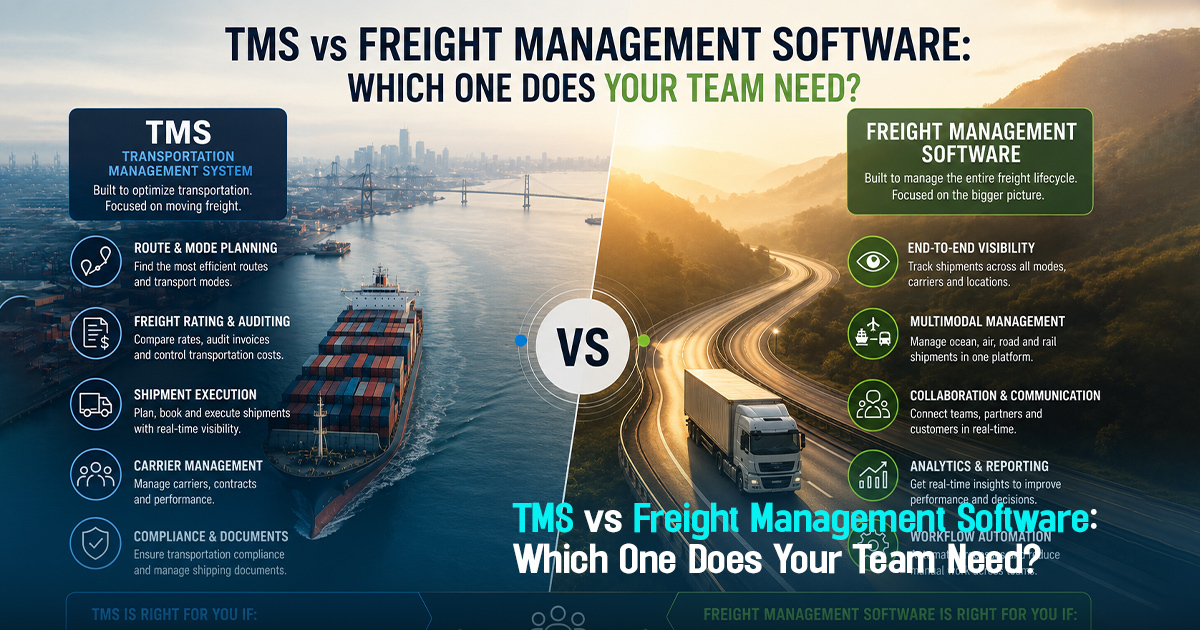
TMS vs Freight Management Software: Which One Does Your Team Need?


6 Minutes
Freight management software and transportation management systems (TMS) are key tools designed to streamline logistics operations, yet they serve different operational needs within freight and supply chain management. Choosing the right system matters because improper selection can lead to workflow inefficiencies, visibility gaps, and elevated costs. This article provides a practical framework and detailed operational guidance to clarify the distinctions between TMS and freight management software, helping teams decide which suits their freight operations best.
What is Freight Management Software and How Does it Differ from a TMS?
Freight management software is a comprehensive platform that centralizes shipment tracking, vendor coordination, procurement workflows, and exception handling, providing end-to-end visibility of freight operations. A transportation management system (TMS), in contrast, primarily focuses on route planning, carrier selection, and freight booking automation.
While a TMS optimizes transportation execution and carrier management, freight management software integrates that with operational clarity through document control, shipment milestone tracking, and customer communication. The distinction is key for logistics teams aiming to improve coordination across multiple carriers and internal functions.

A Practical Freight Operations Workflow: From Procurement to Delivery
A structured workflow can help differentiate where TMS and freight management software fit. Consider this practical 6-step workflow:
1. Rate Request and Vendor Comparison: Collect and compare freight quotes, including routing, transit time, and accessorial charges. This step requires auditability and approval discipline to prevent cost leakage.
2. Approval and Booking: Confirm vendor selection with documented approval before booking. Integration with booking workflows reduces manual errors and follow-ups.
3. Documentation Control: Collect, validate, and handoff necessary documents early to avoid customs or carrier delays. This requires process discipline and clear handoffs.
4. Shipment Tracking and Visibility: Monitor milestones, ETD/ETA updates, and exceptions centrally. Real-time visibility reduces customer escalations and detention risk.
5. Exception Handling: Assign ownership for delays or deviations and communicate proactively with customers. Exception-first workflows improve operational clarity.
6. Delivery and Audit: Confirm final delivery milestones, complete documentation handoffs, and review vendor performance for continuous improvement.
Role-Wise Perspective: What Each Team Needs from Freight Software
Freight Forwarders require tools for carrier coordination, milestone tracking, and exception management to maintain operational control over multiple shipments and vendors.
Importers and Exporters need shipment visibility, ETA/ETD monitoring, and documentation status updates to manage inventory timing and compliance effectively.
Operations Teams rely on centralized tracking dashboards, exception-first workflows, and smooth handoffs between carriers and documentation teams to reduce delays.
Procurement Teams focus on vendor comparison, rate evaluation including accessorials, and approval control to avoid unplanned costs and ensure compliance with contracted rates.
Documentation Teams require disciplined workflows for document collection, validation, and customs checkpoint handling to prevent shipment holdups.
Process-Wise Implementation: Before, During, and After Shipment
Before Shipment: Validate quotes, confirm routing and transit times, secure approvals, collect documents, and plan deliveries proactively to minimize operational risks.
During Shipment: Track shipment milestones in real-time, monitor ETA/ETD changes, manage exceptions promptly, and communicate updates internally and with customers.
After Shipment: Confirm delivery, finalize documentation handoffs, analyze vendor performance, review exceptions for root causes, and archive audit-ready records.
Freight Operations Examples Highlighting the Differences
Example 1: A freight forwarder using only a TMS missed early customs document submission, causing clearance delays. Freight management software integrates document workflows to prevent such risks.
Example 2: Procurement approved a carrier bid without verifying accessorial charges, leading to unexpected costs. A freight management platform enforces rate checks and approval discipline.
Example 3: Operations team struggled with fragmented carrier portals for tracking. Centralized shipment visibility in freight management software consolidated real-time ETD/ETA updates, reducing follow-ups.
Centralized visibility and exception ownership drive quicker decisions and smoother freight operations.
Practical checklist
Use this checklist to assess your freight software needs and operational readiness:
- ✔ Are vendor quotes compared with accessorial charges and routing considered?
- ✔ Is booking approval documented before confirmation?
- ✔ Are all shipment documents collected, validated, and tracked centrally?
- ✔ Are ETD and ETA changes monitored centrally and communicated promptly?
- ✔ Are exceptions assigned to clear owners with escalation protocols?
- ✔ Is customer communication proactive and exception-driven?
- ✔ Can you view and coordinate multiple carriers in a single dashboard?
- ✔ Is documentation handoff clearly recorded before customs checkpoints?
- ✔ Do you have audit-ready records of all procurement and shipment activities?
- ✔ Does your system enable cost analysis including detention and demurrage risks?

Common mistakes
Mistake 1: Treating TMS and Freight Management Software as interchangeable
Many teams assume TMS covers all freight needs, missing key features like centralized tracking and documentation workflows. Fix: Assess operational gaps and adopt freight management software to complement or replace TMS features as per workflow needs.
Mistake 2: Ignoring documentation workflows in freight operations
Delays often arise from poor document management leading to customs or carrier hold-ups. Fix: Integrate document validation and handoff steps into your freight software process to ensure timely customs clearance.
Mistake 3: Lack of exception ownership
Shipment delays go unmanaged when no clear owner is assigned for exceptions, escalating customer and operational risks. Fix: Implement exception-first workflows assigning tasks and alerting teams proactively.
Mistake 4: Approving freight rates without comprehensive accessorial and routing review
Hidden charges often lead to budget overruns. Fix: Enforce detailed vendor comparison and approval discipline in the procurement workflow.
Mistake 5: Managing shipment tracking across fragmented carrier portals
Manual aggregation increases follow-ups and visibility gaps. Fix: Centralize carrier tracking in a single platform for consolidated ETD/ETA and milestone monitoring.
A Frayto-Aligned Freight Workflow for Operational Clarity
A practical workflow combining freight procurement and shipment supervision includes: Rate Request → Vendor Comparison → Approval → Booking → Tracking → Exception Closure. This flow connects procurement decisions to execution seamlessly, ensuring auditability and operational visibility.
Integrating shipment visibility and documentation control within this framework reduces delays, improves customer updates, and ensures proactive exception management. Centralized control of rates, carriers, and documentation fosters operational clarity and cost discipline.
TMS vs Freight Management Software: A Comparative Insight
TMS primarily focuses on transportation execution — planning routes, booking carriers, and managing freight consolidation. It automates operational tasks but typically lacks comprehensive shipment visibility and customer communication tools.
Freight management software extends beyond these capabilities, integrating procurement workflows, centralized tracking across carriers, document control, milestone monitoring, and exception handling. This broader scope supports complex freight and logistics operations better where multifaceted coordination is required.
Why Freight Teams Struggle Without a Clear Software Strategy
Fragmented systems lead to siloed data, manual follow-ups, and missed milestone updates, resulting in increased detention risks and customer escalation. Without structured freight procurement and shipment visibility workflows, teams spend excessive time chasing updates rather than managing exceptions effectively.
In contrast, well-integrated freight management software enables teams to focus on exception-first operations, maintain customer trust with proactive updates, and control costs through audit-ready rate evaluations and documentation discipline.
Get in Touch!
We'll reach out shortly with the info you need. No spam, just a helpful conversation.
Recommended Blogs
Freightstory Technologies Private Limited
A-209, Dynasty Business Park, JB Nagar,
Andheri East, Mumbai- 400059, India


For Exporters & Importers
For Freight Forwarders
© 2026 Frayto. All Rights Reserved.