


Solutions
For Exporters & Importers

For Freight Forwarders and Logistics Service Providers
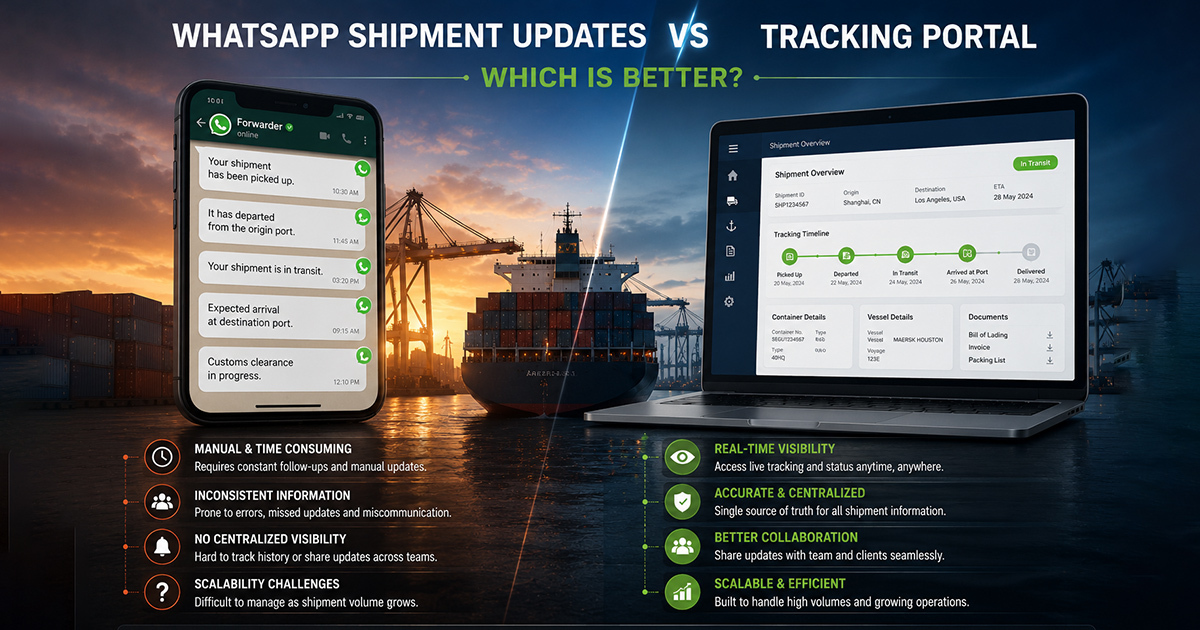
WhatsApp Shipment Updates vs Tracking Portal: Which Is Better for Shipment Tracking Solutions?


5 Minutes
Shipment tracking solutions are essential logistics tools that provide clear, real-time visibility into cargo status across global supply chains. Among popular options, WhatsApp shipment updates and dedicated tracking portals stand out, but each has operational implications that affect shipment visibility, exception handling, and customer communication. This article compares these two common shipment tracking solutions from a practical freight operations perspective, helping logistics teams decide which approach better supports centralized control, milestone tracking, and risk management.
What Are WhatsApp Shipment Updates and Tracking Portals?
WhatsApp shipment updates involve manually sharing shipment status messages via instant messaging groups or chats, usually created by freight forwarders or carriers.Tracking portals are centralized digital platforms that aggregate real-time data from multiple carriers, presenting standardized shipment milestones and documents in one location.
While WhatsApp updates rely on human input and can be informal, tracking portals automate milestone updates with frequent carrier inputs. Each method impacts visibility quality, decision timing, and exception management differently, shaping how logistics teams control operations and communicate with customers.
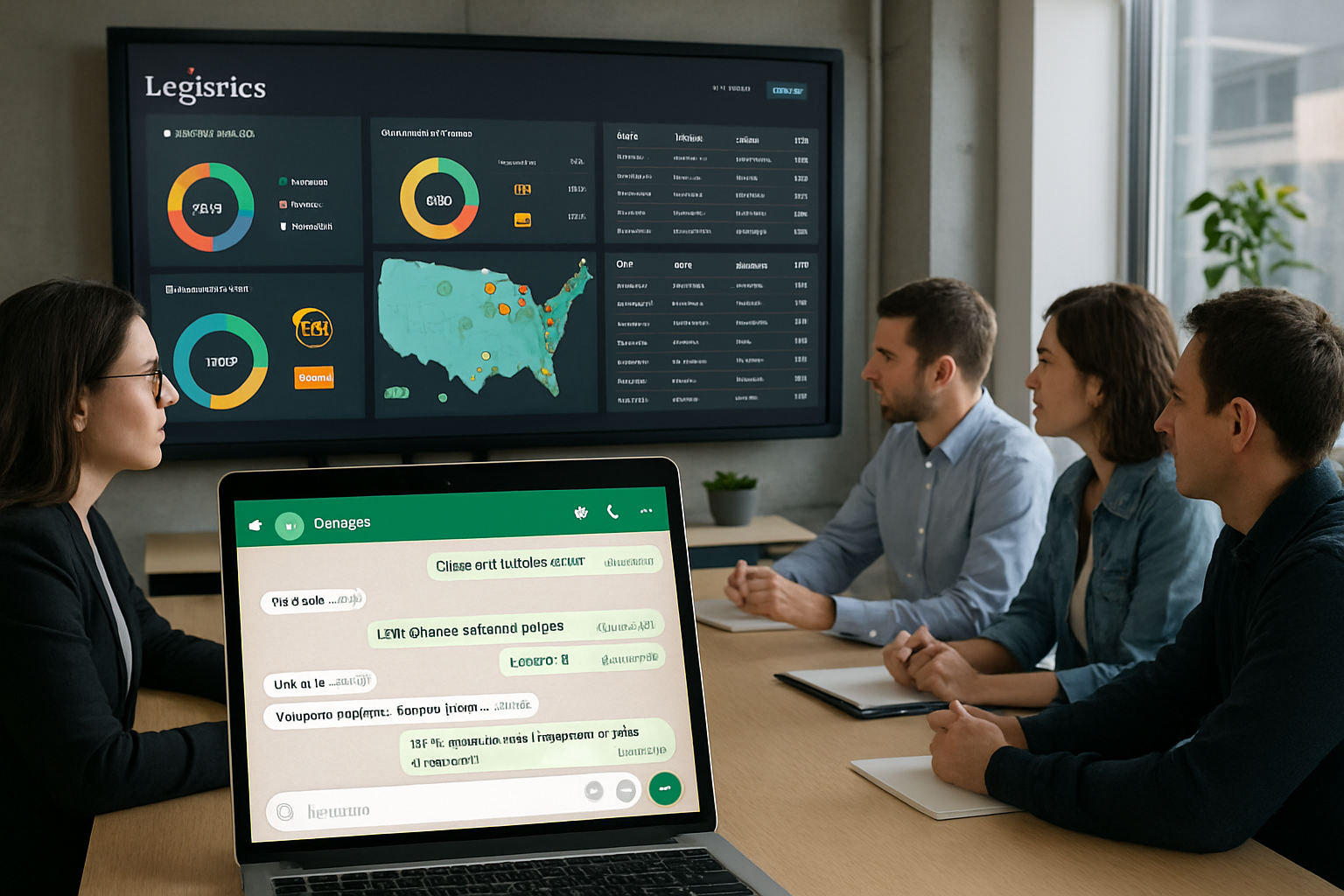
A Practical Shipment Tracking Workflow Framework
Effective shipment tracking solutions follow a structured workflow: Booking Confirmation → Milestone Monitoring → Exception Detection → Proactive Customer Updates → Documentation Control → Final Delivery Verification.
In this workflow, booking confirmation triggers integration with carriers and visibility platforms. Milestones like ETD (Estimated Time of Departure), vessel departure, transshipment, and ETA (Estimated Time of Arrival) are tracked centrally. Exceptions such as delays or document gaps prompt immediate alerts. Customer updates are scheduled proactively before escalations, and final delivery milestones close the shipment record. WhatsApp updates often disrupt this flow with inconsistent timing, while portals enhance real-time visibility and audit trails.
Role-Wise Implication of Shipment Tracking Solutions
Freight forwarders must coordinate multiple carriers and ensure milestones are logged accurately; WhatsApp creates scattered trails, while portals centralize control.Importers and exporters benefit from predictable, real-time updates that improve planning; portals reduce uncertainty caused by delayed or missing WhatsApp messages.
Operations teams need consolidated dashboards highlighting ETA changes and exceptions instantly; portals enable this visibility, unlike WhatsApp which requires manual collation.Procurement and documentation teams rely on documented audit trails and timely document handoffs; portals support documentation workflows and auditability better than chat-based updates.
Process-Wise Breakdown: Before, During, and After Shipment Tracking
Before shipment, teams confirm bookings and integrate shipment details in a portal or WhatsApp group. The portal approach enables visible approval and rate audit trails before booking.
During shipment, tracking portals automatically pull carrier milestone data, monitor ETD/ETA updates, and flag exceptions. WhatsApp relies on manual updates that can be delayed or incomplete, increasing follow-up workload. Consistent customer updates hinge on timely exception handling.
After delivery, portals facilitate review of shipment timelines, carrier performance, and cost impacts like detention or demurrage risks, which are often missed when relying on WhatsApp. Documentation workflows also close appropriately in portal-based systems, supporting audit readiness and cost control.
Three Concrete Freight Operations Examples
1. A freight forwarder using WhatsApp for updates missed a critical ETA change because the carrier delay notification was shared late. This caused container demurrage at the destination port due to late trucker scheduling.
2. An importer tracked their shipment on a portal displaying live ETA and milestone data from multiple carriers simultaneously, enabling early exception handling and smooth customs clearance planning.
3. A documentation team struggled with manual WhatsApp record-keeping for delivery receipts, leading to delays in proof-of-delivery (POD) handoffs. Conversely, portal integration automated document collection, speeding invoice reconciliation.
Centralized shipment tracking with exception ownership transforms visibility into operational control.
Practical checklist
Use this checklist to assess your shipment tracking solution’s effectiveness:
- Are all ETD and ETA updates captured centrally and visible to the team?
- Is there a single source of truth for shipment milestones accessible by all stakeholders?
- Are shipment exceptions flagged and assigned to owners immediately upon detection?
- Are customer updates automated or scheduled proactively to avoid escalations?
- Is documentation workflow integrated and timestamped, from proof-of-pickup to delivery?
- Are follow-ups with carriers streamlined with a clear owner and timeline?
- Does the system record a detailed audit trail for shipment status changes and communications?
- Is multi-carrier tracking consolidated into a unified platform or screen?
- Does the platform facilitate cost risk monitoring such as detention and demurrage?
- Are visibility gaps documented and regularly reviewed for process improvements?

Common mistakes
1. Relying solely on WhatsApp for shipment updates causes data fragmentation, missed milestone alerts, and lack of audit trails. Fix: Adopt centralized portals that automate milestone tracking and provide exception dashboards.
2. Delayed escalation of exceptions due to lack of ownership often happens with informal WhatsApp groups where follow-ups are overlooked. Fix: Implement exception-first workflows with clear owner assignment and automatic reminders.
3. Missing ETD/ETA changes because updates are buried in chat threads leads to poor planning and increased detention risk. Fix: Use tracking portals that highlight ETA changes prominently for fast operational decisions.
4. Poor documentation handoffs because WhatsApp lacks validated document workflows increase invoice disputes and clearance delays. Fix: Integrate shipment documentation modules within visibility platforms for process discipline and audit readiness.
5. Fragmented customer communication due to inconsistent WhatsApp updates undermines trust and escalates queries. Fix: Use centralized portals to automate consistent, decision-ready customer notifications with milestone visibility.
A Frayto-aligned shipment tracking workflow
Frayto’s structured approach to shipment tracking follows: Booking Capture → Centralized Carrier Milestone Aggregation → ETD/ETA Monitoring → Exception-First Messaging with Owner Assignment → Automated Customer Updates → Documentation Workflow Integration → Delivery Confirmation and Audit.
This workflow ensures operational clarity by replacing scattered WhatsApp updates with centralized data, enabling logistics teams to identify risks early, follow up systematically, and keep customers informed consistently—achieving better cost control and reducing detention and demurrage risks.
FAQ
Get in Touch!
We'll reach out shortly with the info you need. No spam, just a helpful conversation.
Recommended Blogs
Freightstory Technologies Private Limited
A-209, Dynasty Business Park, JB Nagar,
Andheri East, Mumbai- 400059, India


For Exporters & Importers
For Freight Forwarders
© 2026 Frayto. All Rights Reserved.