


Solutions
For Exporters & Importers

For Freight Forwarders and Logistics Service Providers
Shipment Visibility Platform vs Freight Forwarding Software: What Logistics Teams Need to Know


7 Minutes
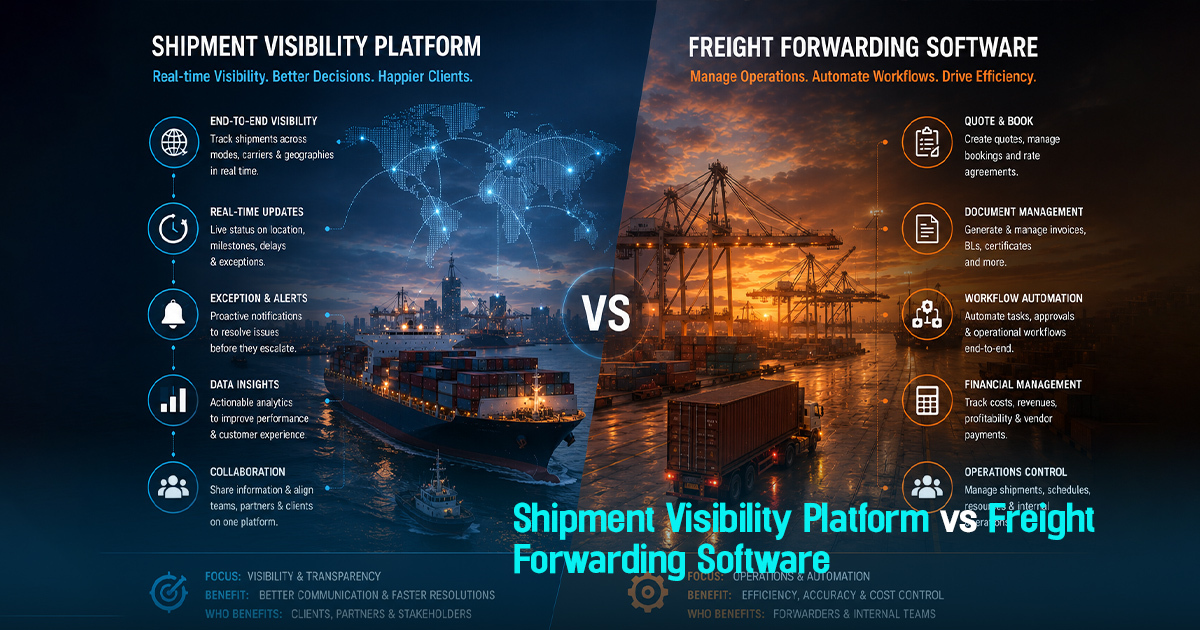
A shipment visibility platform is a specialized logistics tool designed to provide centralized real-time tracking, milestone updates, ETA/ETD monitoring, and exception alerts across multiple carriers and transport modes. It enables logistics teams to see shipment status updates comprehensively and quickly identify risks. In contrast, freight forwarding software offers broader operational features such as booking management, documentation control, vendor coordination, and freight procurement workflows. Understanding these differences helps operations teams make crucial decisions about what system fits their needs for enhanced logistics visibility solutions and smoother freight management. This article explores how shipment visibility platforms and freight forwarding software differ operationally, and how logistics teams can leverage both for better clarity and control.
What Is a Shipment Visibility Platform and How Does It Differ from Freight Forwarding Software?
Shipment visibility platforms focus on tracking and monitoring every movement of cargo in real time, aggregating data from multiple carriers and transport modes into one centralized dashboard. They emphasize milestone tracking, ETA/ETD monitoring, and exception handling to provide operational clarity beyond simple tracking.
Conversely, freight forwarding software encompasses end-to-end freight operations including freight procurement, booking management, documentation workflows, vendor coordination, and shipment tracking—usually more basic or embedded within larger operational features. While shipment visibility platforms specialize in real-time status and alerts, forwarding software prioritizes workflow management across freight stages.

A Practical Workflow Framework: Using Shipment Visibility Platforms and Freight Forwarding Software Together
Combining visibility and operational control calls for a structured workflow: Procurement → Booking → Shipment Visibility → Exception Handling → Customer Communication → Documentation → Audit.
1. Procurement: Freight forwarding software helps compare vendors, validate quotes, and approve shipments.
2. Booking: Use forwarding software to manage carrier bookings and control accessorials.
3. Shipment Visibility: The visibility platform consolidates ETAs, milestones, and carrier updates from different providers.
4. Exception Handling: Quickly detect delivery delays and assign ownership using visibility alerts.
5. Customer Communication: Automated updates reduce manual follow-ups.
6. Documentation: Forwarding software manages document collection, validation, and handoffs.
7. Audit: Both systems contribute to compliance records and operational reviews.
Role-Wise Guidance: What Each Logistics Team Should Monitor
Freight Forwarders: Coordinate vendor selection, booking management, and document control while leveraging visibility platforms for milestone tracking. They ensure seamless carrier coordination and follow up on exceptions.
Importers and Exporters: Monitor shipment visibility dashboards for real-time ETAs and status updates. They require clear visibility to plan customs clearance and delivery.
Operations Teams: Track daily milestones, exceptions, ETA changes, and customer communication workflows to minimize delays and demurrage risks. They benefit from centralized shipment visibility and exception ownership.
Procurement and Documentation Teams: Compare freight quotes, validate rates, and approve bookings with freight forwarding software, while ensuring on-time document collection and customs compliance. Shipment visibility platforms provide status data to anticipate documentation needs.
Stage-Wise Breakdown: Before, During, and After Shipment
Before Shipment: Freight procurement teams use forwarding software for vendor comparison, rate validation, and booking confirmation. Documentation teams initiate paperwork collection considering shipment specifics.
During Shipment: Shipment visibility platforms consolidate carrier data, track milestones, and monitor ETA/ETD changes. Operations teams handle exceptions proactively based on alerts, resolving delays or disruptions.
After Shipment: Documentation teams ensure all necessary proofs of delivery and customs documents are verified and archived. Procurement and operations teams analyze shipment performance for audit and improvement.
Practical Checklist
To optimize your use of shipment visibility platforms and freight forwarding software, check:
1. Are vendor quotes compared with standardized criteria before approval?
2. Is booking confirmed with all accessorial charges accounted for?
3. Are all shipment milestones tracked in a centralized visibility dashboard?
4. Are exceptions flagged immediately with clear ownership assigned?
5. Are ETA and ETD changes updated in real-time?
6. Are customer updates automated based on shipment status changes?
7. Is documentation collected and validated before customs checkpoints?
8. Are follow-ups on exceptions logged and closed in the system?
9. Are shipment audit trails maintained for compliance?
10. Are multiple carrier data sources consolidated for a single view?
Centralized shipment visibility transforms reactive freight management into proactive operational control.
Common Mistakes and How to Fix Them
1. Treating shipment tracking as a separate task from operations: This causes information silos and slow response times. Fix by integrating visibility platforms with forwarding workflows to connect tracking with exception handling and communication.
2. Relying on manual updates or multiple disconnected carrier portals: Leads to missed ETA changes and slow visibility. Use centralized visibility platforms aggregating multiple carriers for consistent real-time updates.
3. Ignoring accessorial charges during rate approvals: Causes unforeseen costs and procurement inefficiencies. Enforce structured freight forwarding software workflows that require detailed cost validation before booking.
4. Delayed documentation handoffs before customs clearance: Can create shipment holdups and penalties. Implement strict documentation workflows embedded in forwarding software, triggered by shipment milestones from visibility tools.
5. Lack of exception ownership leads to follow-up fatigue: Customer service teams chase multiple carriers without clear resolution paths. Assign clear owners in the visibility platform immediately on exception detection to streamline follow-ups.
6. Overloading teams with excessive raw data instead of actionable alerts: This slows decision making. Visibility solutions must filter raw tracking into actionable exceptions prioritized by impact and timing.

Examples from Real Freight Operations
A freight forwarder missed a vessel delay notification because updates were spread across carrier portals, causing customer escalation and demurrage costs. Centralizing tracking prevented repetition.
In another case, procurement teams approved a quote without checking for detention risks reflected in shipment visibility data, leading to surprise fees.
Operational teams using visibility platforms detected ETA changes early, reallocating transportation resources to mitigate delays and inform customers proactively.
A Frayto-Aligned Workflow: Connecting Procurement, Visibility, and Exception Handling
Frayto's approach streamlines freight workflows as follows: Rate Request → Vendor Comparison → Approval Discipline → Booking Control → Centralized Shipment Tracking → Exception Detection & Follow-Up → Customer Updates & Documentation Handoffs → Audit & Review. This builds operational clarity by connecting procurement decisions to real-world shipment progress and exceptions in a single platform.
Teams gain control over accessorial charges, booking approvals, and vendor performance while simultaneously maintaining real-time visibility into shipments and managing exceptions proactively. This dual control reduces costly follow-ups, minimizes detention risks, and ensures audit readiness.
Why Logistics Teams Struggle With Shipment Coordination and How Visibility Platforms Help
Fragmented shipment data and multiple communication channels create operational blind spots. Teams waste hours chasing updates, missing exceptions, or duplicating efforts. Visibility platforms consolidate tracking inputs and generate timely alerts with exception ownership. This reduces reaction times and puts teams in a proactive mode.
Rather than manually collating updates from freight forwarding software, carrier emails, phone calls, or spreadsheets, teams gain a unified operational view. This leads to better shipment coordination and a reduction in costly execution errors.
Shipment Visibility Platform vs Freight Forwarding Software: Key Differences for Decision Makers
Visibility platforms excel at real-time shipment tracking, milestone alerts, exception ownership, and customer communication automation. They act as a logistics control tower focused purely on operational clarity and shipment status transparency.
Freight forwarding software provides an operational backbone supporting freight procurement, booking workflows, documentation control, and vendor coordination. It lacks specialized real-time tracking layers but manages shipment lifecycle broadly.
Understanding these differences empowers logistics leaders to choose platforms that align with their operational priorities without conflating tracking with overall freight management.
How to Manage Shipment Visibility Across Multiple Carriers
Freight teams juggling multiple carrier portals face duplicate efforts and fragmented visibility. Shipment visibility platforms aggregate data via APIs or standardized event messages, providing a centralized dashboard. They normalize different carrier milestone formats into a common view with unified ETA/ETD monitoring and exception alerts.
Operations teams can therefore focus on exception resolution rather than hunting for updates, improving response times and customer service quality. This approach is critical in multimodal or international logistics with diverse service providers.
Conclusion
Understanding the roles of a shipment visibility platform and freight forwarding software within logistics operations is essential for operational clarity and risk reduction. A visibility platform focuses sharply on providing real-time, centralized shipment monitoring, ETA/ETD tracking, exception detection, and customer communication automation. In contrast, freight forwarding software manages broader freight operations, including procurement, booking, documentation workflows, and vendor coordination. Both systems serve distinct but complementary purposes. For teams managing complex, high-volume freight flows, integrating a shipment visibility platform with freight forwarding software creates a structured, exception-first logistics workflow, improving decision timing, reducing costly follow-ups, and helping avoid detention or demurrage risks. Leveraging these tools with clear process discipline and centralized control empowers logistics teams and supply chain managers to maintain better visibility and smoother execution across freight lifecycles. Structured freight operations combining visibility and procurement discipline are no longer optional—they are critical for managing modern freight complexity efficiently.
Get in Touch!
We'll reach out shortly with the info you need. No spam, just a helpful conversation.
Recommended Blogs
Freightstory Technologies Private Limited
A-209, Dynasty Business Park, JB Nagar,
Andheri East, Mumbai- 400059, India


For Exporters & Importers
For Freight Forwarders
© 2026 Frayto. All Rights Reserved.