


Solutions
For Exporters & Importers

For Freight Forwarders and Logistics Service Providers
Freight Management Software for Importers: Reducing Delays and Cost Leakage


7 Minutes
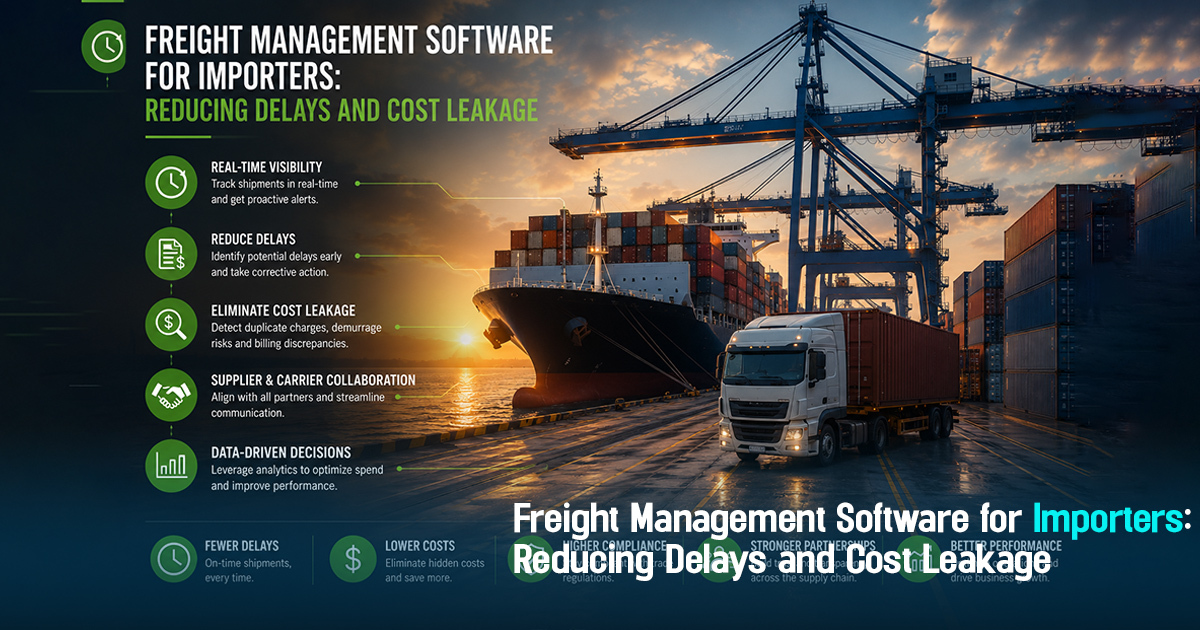
Freight management software for importers is a logistics tool designed to centralize and streamline freight operations, reduce delays, and minimize cost leakage. Operationally, importers face complex challenges such as fragmented shipment visibility, manual coordination, documentation delays, and untracked exceptions that increase landed costs and slow customs clearance. This article explores practical steps to implement freight management software for importers, focusing on workflows that improve visibility, control costs, and reduce costly delays.
What Is Freight Management Software for Importers?
Freight management software for importers centralizes the administration of inbound shipments across carriers and vendors, providing real-time visibility and operational control over procurement, documentation, tracking, and exception handling.
It helps importers reduce delays by monitoring milestones, coordinating vendors, ensuring documentation readiness, and managing transport exceptions. This results in tighter freight cost optimization and fewer surprise charges such as detention and demurrage, thereby protecting profit margins and improving supply chain reliability.

A Practical Freight Management Workflow for Importers
A structured workflow is essential to leverage freight management software effectively for import operations. The following seven-step framework illustrates key process points:
1. Rate Request and Vendor Comparison: Importers send structured freight requirements to vendors, comparing quotes on total cost, transit times, and accessorials to avoid hidden charges.
2. Approval and Booking: Validate quotes against budgets and timelines before booking, capturing approvals to maintain audit trails and prevent unauthorized spend.
3. Documentation Collection and Validation: Receive and verify commercial invoices, packing lists, and customs paperwork to ensure no holds at import checkpoints.
4. Centralized Shipment Tracking and Visibility: Monitor key milestones like ETD, ETA, customs arrival, and gate in a unified view to identify potential delays early.
5. Exception Handling and Carrier Coordination: Proactively manage delays or discrepancies by assigning ownership and communicating with carriers and vendors promptly.
6. Customer Communication and Internal Updates: Share timely, exception-first status updates with internal teams and customers to reduce follow-ups and manage expectations.
7. Post-Delivery Review and Audit: Analyze shipment performance, exceptions closed, and cost variances including detention or demurrage charges to improve future shipments.
This workflow moves importers from reactive to controlled execution by linking procurement, documentation, tracking, and communication into a seamless process.
Role-Wise Responsibilities for Improved Freight Management
Freight Forwarders: Coordinate vendor bookings, provide accurate shipment status updates, and escalate exceptions swiftly to avoid cascading delays.
Importers and Exporters: Monitor shipment milestones through a centralized software dashboard, validate documentation early, and track vendor performance against SLAs.
Operations Teams: Oversee shipment progress daily, own exception resolution, communicate ETA/ETD changes to customers, and verify shipment closeouts to control landed cost risks.
Procurement Teams: Compare freight rates on equal terms, validate accessorial charges and contract terms, ensure approval discipline, and audit shipment costs post-delivery to minimize leakage.
Documentation Teams: Manage document handoffs with carriers and customs, check document accuracy and completeness, and ensure paperwork is ready before arrival to prevent customs delays.
Before, During, and After Import Shipment Management Stages
Before Shipment Booking: Verify freight quotes, routing options, required documents, and compliance checkpoints. Confirm vendor responsibilities and approval to avoid last-minute changes.
During Transit: Track shipment milestones such as departure, vessel ETA, customs arrival, and gate-in through centralized visibility tools. Flag deviations early to assign owners and coordinate carriers.
Before Arrival: Reconfirm documentation reception, customs clearance readiness, and final delivery planning. Review detention risk and prepare customer notifications.
After Delivery: Complete operational closeout by resolving exceptions, validating final freight invoices, and performing root cause analysis of delays or exceptions for process improvement.
Operational clarity through centralized visibility and disciplined workflows cuts delays and prevents costly leakage.
Practical checklist
Use this checklist to ensure your freight management software implementation reduces delays and cost leakage effectively:
- – Are all vendor quotes compared with accessorial charges included?
- – Is approval recorded before booking any shipment?
- – Is documentation collected and validated before shipment arrival?
- – Are ETD and ETA milestones tracked centrally with daily updates?
- – Are exceptions assigned an owner and resolved in a timely manner?
- – Is customer communication proactive with exception-first alerts?
- – Are detention and demurrage risks flagged before vessel arrival?
- – Is shipment status visible to all relevant internal teams via one platform?
- – Do procurement and operations teams audit freight costs post-delivery?
- – Are vendor performance and SLA compliance reviewed regularly?
Common mistakes
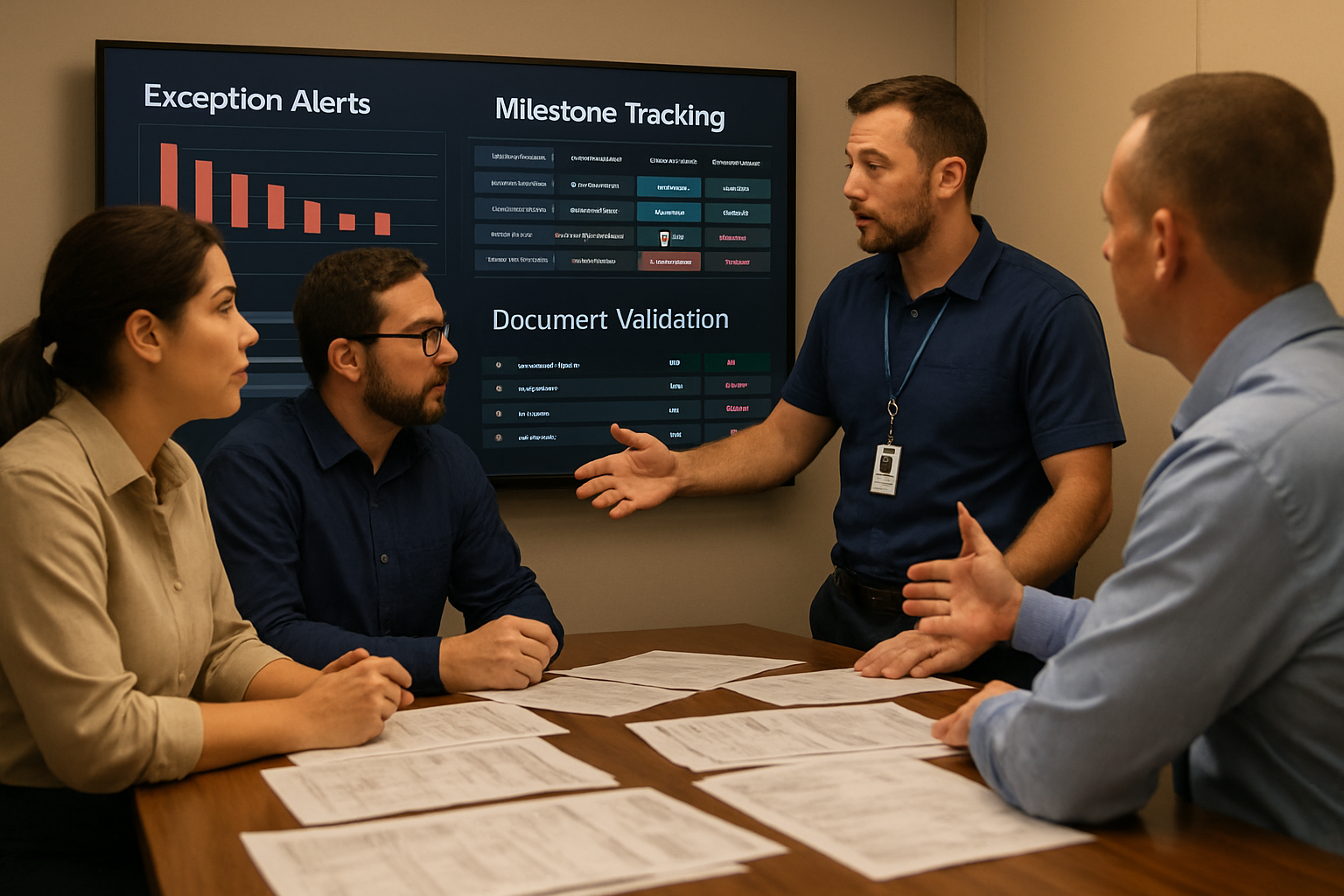
Identifying and fixing common operational errors can significantly improve importer freight management:
Mistake 1: Fragmented shipment tracking across multiple portals
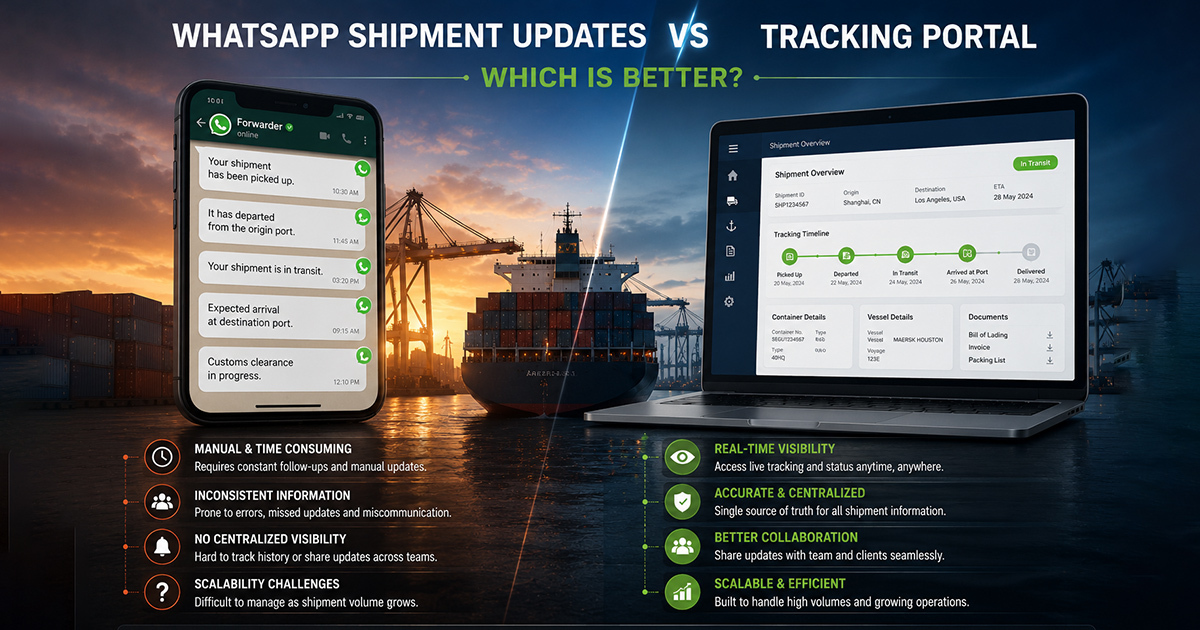
Importers often juggle various carrier websites and emails. This leads to missed ETA changes and delayed exception detection. Fix: Use a centralized freight management platform to unify tracking and alerts.
Mistake 2: Approving freight without validating accessorial charges
Ignoring accessorials like detention or customs fees causes unforeseen cost leakage. Fix: Enforce structured quote validation that breaks down costs before approval.
Mistake 3: Late documentation collection causing customs delays
Receiving documents post-arrival often holds shipments at ports. Fix: Implement documentary workflows with handoff deadlines integrated into freight systems.
Mistake 4: Delayed exception ownership and follow-ups
Without clear accountability, shipment issues escalate and increase delivery time. Fix: Assign exception owners automatically and track resolution within the software.
Mistake 5: Reactive customer communication after escalation
Waiting for customer queries before updates damages trust. Fix: Adopt exception-first communication, proactively updating stakeholders.
Frayto-Aligned Workflow for Import Freight Management
A freight management software workflow aligned with Frayto principles ensures operational clarity for importers:
Rate Request → Vendor Comparison → Approval → Booking → Centralized Tracking → Exception Handling → Customer Updates → Post-Delivery Audit
This sequence promotes auditability by capturing approvals upfront, improves freight cost optimization through vendor rate comparisons, and enhances shipment visibility by centralizing tracking and ownership, resulting in fewer delays and cost leakages.
Freight Management Examples Reducing Delays and Cost Leakage
Example 1: An importer missed an ETA change because shipment tracking was manual across emails. Centralizing visibility enabled earlier carrier follow-ups, reducing delay impact by two days.
Example 2: Procurement approved a low freight rate but ignored accessorials, resulting in high demurrage fees. Structured quote validation later helped prevent repeat cost leakage.
Example 3: Documentation teams previously handed off customs papers late, causing port holdups. Implementing documentation workflows with deadlines ensured readiness before vessel arrival, eliminating clearance delays.
How to Choose and Implement Importer Freight Management Solutions
Start by assessing your current freight operations pain points such as visibility gaps or cost surprises. Select software that supports centralized tracking across carriers, structured procurement workflows, exception management, documentation controls, and customer communication dashboards.
Implement in phases: first align procurement and booking processes, then onboard operations and documentation teams to centralized shipment visibility and exception handling. Train users on using milestone tracking for proactive management instead of reactive firefighting.
Why Freight Management Software Matters for Importers
Shipping delays and cost leakage are direct profit threats in importing. Freight management software provides structured workflows and real-time insights needed to reduce these risks.
When importers move from scattered systems and manual follow-ups to centralized controls and exception-first processes, they gain greater operational clarity, better vendor coordination, and more accurate landed cost visibility — essential for today’s complex global freight environment.
Conclusion
Implementing freight management software for importers is not just a technology upgrade — it's a move toward structured operational discipline that tightly integrates procurement, shipment tracking, documentation, and customer communication. By achieving centralized shipment visibility, importers can identify ETA changes early, assign exceptions to dedicated owners, and reduce costly delays and detention fees. This coordinated workflow helps prevent the widespread issue of cost leakage in freight operations. Import teams equipped with such software establish better audit trails for freight cost approvals and vendor performance, enabling continuous improvement. Ultimately, freight management software empowers importers with operational clarity and risk reduction that manual or fragmented processes cannot deliver. For procurement, operations, and documentation teams alike, the takeaway is clear: moving from siloed tasks to one integrated system is essential to minimize delays and control freight costs effectively in today’s global logistics landscape.
Get in Touch!
We'll reach out shortly with the info you need. No spam, just a helpful conversation.
Recommended Blogs
Freightstory Technologies Private Limited
A-209, Dynasty Business Park, JB Nagar,
Andheri East, Mumbai- 400059, India


For Exporters & Importers
For Freight Forwarders
© 2026 Frayto. All Rights Reserved.