


Solutions
For Exporters & Importers

For Freight Forwarders and Logistics Service Providers
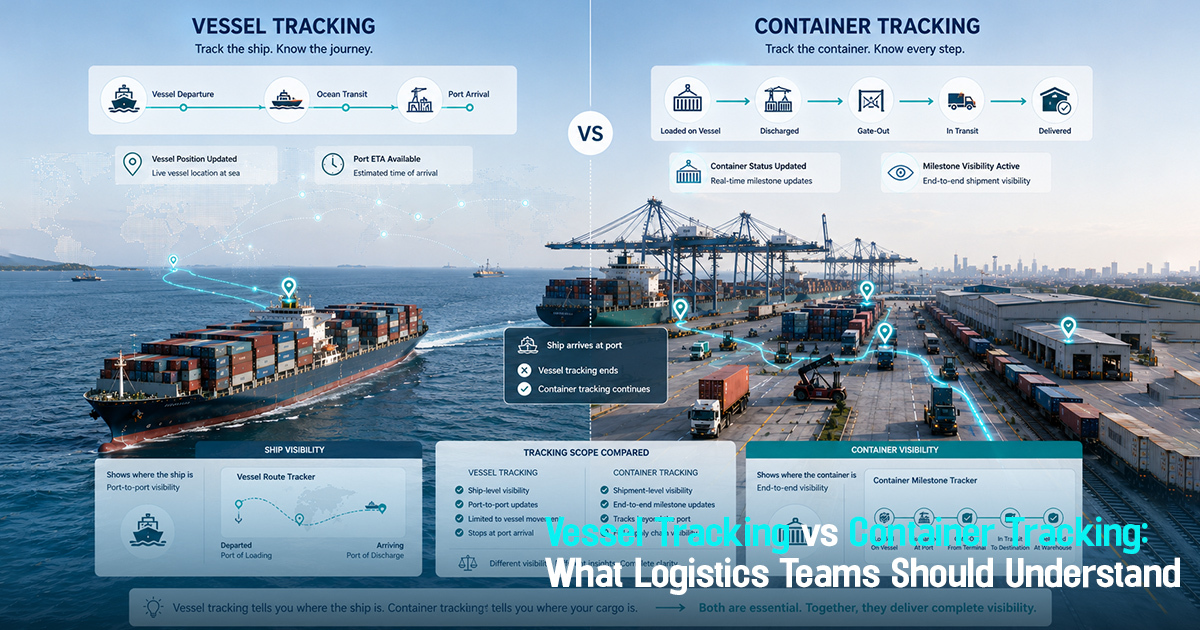
Vessel Tracking vs Container Tracking: What Logistics Teams Should Understand


4 Minutes
Vessel tracking vs container tracking is a critical distinction for logistics teams focused on maritime shipment visibility. Each tracking method provides different operational insights essential for freight forwarders, supply chain managers, and operations teams. Understanding these differences improves shipment monitoring, enhances exception handling, and leads to better decision-making across procurement and delivery workflows.
What is Vessel Tracking vs Container Tracking?
Vessel tracking follows the movements of ships transporting cargo across maritime routes, using AIS and satellite data, while container tracking monitors individual containers, often across multiple transport legs and modes.
For logistics teams, vessel tracking offers a macro-level view of shipments, whereas container tracking delivers micro-level visibility into each cargo unit’s status. Both are essential but serve distinct operational roles in shipment visibility and control.
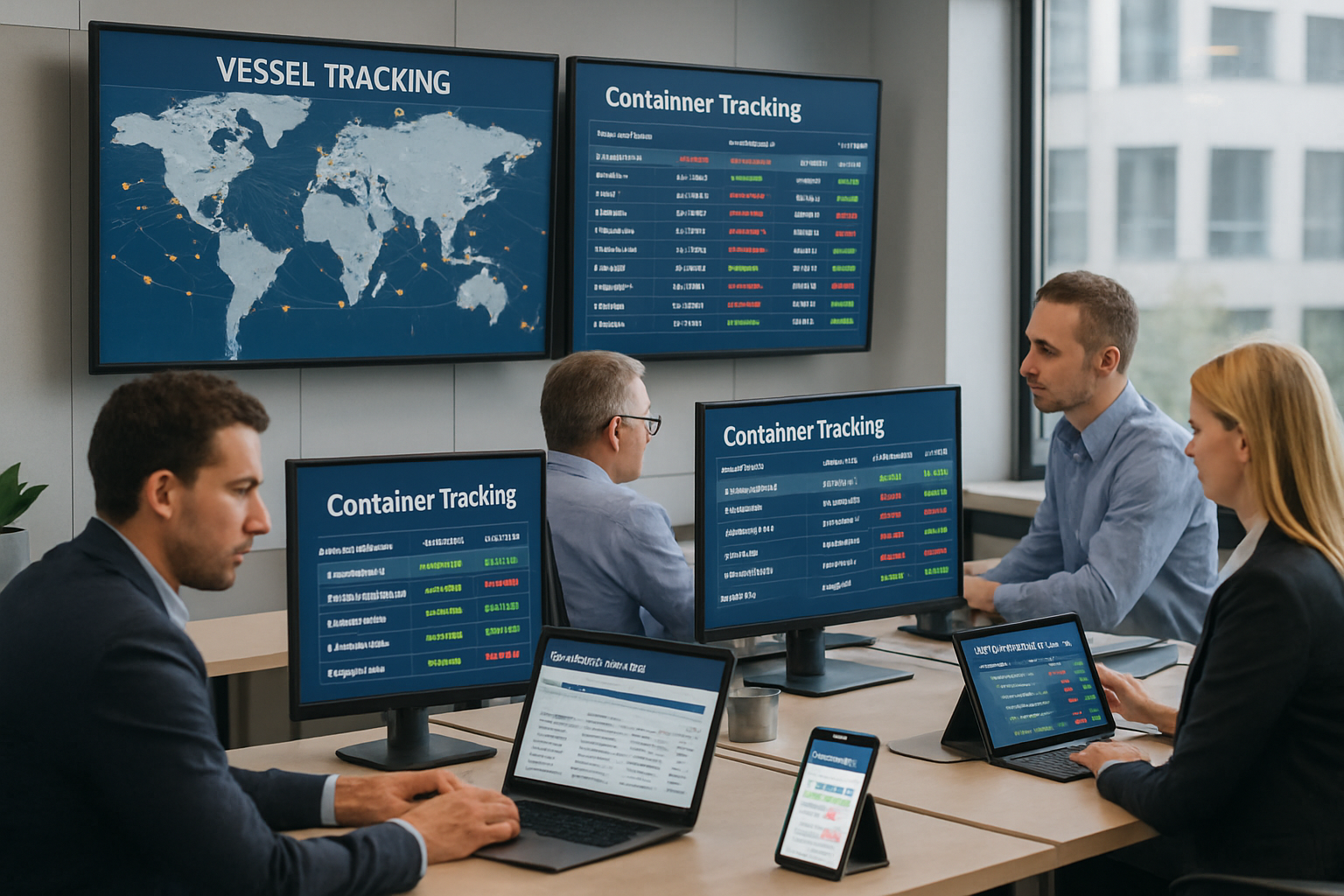
Key Differences Between Vessel and Container Tracking
Vessel tracking technology uses Automatic Identification System (AIS) signals to provide real-time locations of ships, primarily focusing on the vessel’s journey and estimated time of arrival (ETA) at ports. By contrast, container tracking systems leverage IoT devices, GPS, and RFID technologies to track a container’s precise location and condition, including through inland transport and customs checkpoints.
Focusing on vessel tracking helps anticipate arrival and departure times, enabling proactive booking and cargo readiness. Container tracking emphasizes cargo-level status updates, improving exception detection such as transit delays or deviations, which are crucial for operational adjustments.
Operational Impact and Use Cases
Understanding maritime shipment tracking from both perspectives allows teams to manage expectations accurately and reduce risks. While vessel tracking informs *when* the ship will reach port, container tracking helps confirm *where* the cargo is within the supply chain, including any warehousing, customs, or trucking phases.
For example, in managing detention and demurrage costs, accurate container tracking provides precise timing to control gate-ins or gate-outs, while vessel tracking aids in anticipating berth availability. Effective coordination between these tracking methods avoids costly delays and improves customer communication.
Common Challenges in Tracking Integration
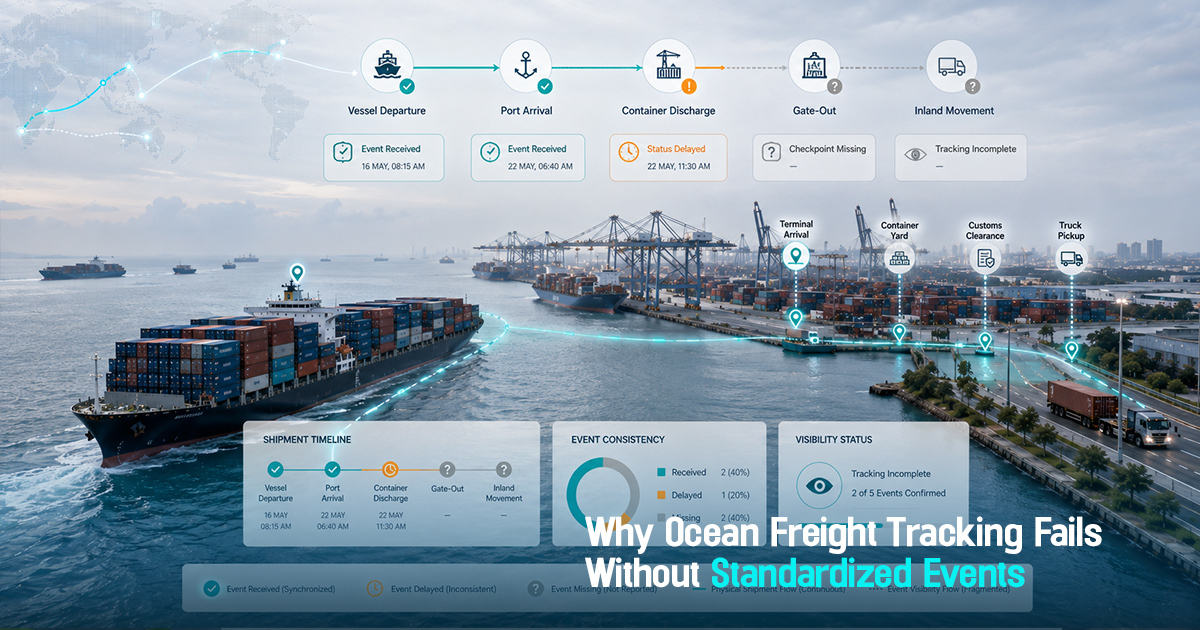
Integrating vessel and container tracking data can be complex due to diverse technology standards, data sources, and timelines. Logistics teams often face delayed or fragmented updates, causing visibility gaps and reactive operations rather than proactive management.
Poor synchronization between maritime shipment tracking and container tracking systems results in inaccurate ETAs, missed exceptions, and inefficient vendor coordination. Addressing this requires disciplined workflows and centralized platforms that consolidate data for unified visibility.
Combining vessel and container tracking improves shipment visibility and prevents costly operational delays.
Practical checklist
Implementing efficient vessel and container tracking involves several steps to ensure operational clarity and exception readiness:
- Assess existing tracking tools and data sources for both vessels and containers.
- Establish a centralized visibility platform that consolidates vessel and container status.
- Integrate real-time alerts for ETA changes and container exceptions like delays or condition anomalies.
- Develop structured workflows for exception handling, including vendor and carrier communications.
- Train operations teams on interpreting vessel movements alongside container location data.
- Regularly review and audit shipment tracking data for accuracy to reduce detention and demurrage risks.
Following these steps improves supply chain shipment monitoring and supports more predictable freight forwarding shipment tracking.
Comparison Insight: Vessel vs Container Tracking for Decision-Making
Vessel tracking excels at providing ETA forecasts and managing overall voyage progress, which is critical for strategic planning and booking management. In contrast, container tracking offers detailed operational updates essential for tactical responses such as handling shipment exceptions, customs clearance status, and local delivery scheduling.
Combined, these tracking methods empower logistics teams to align proactive procurement with responsive operations, increasing end-to-end freight visibility and control.
Common mistakes
A frequent error in logistics shipment visibility is focusing exclusively on either vessel or container tracking, which narrows insight and leads to missed exceptions. Some teams rely heavily on basic AIS-based vessel tracking without integrating detailed container location and status, reducing operational control.
Another mistake is ignoring transit phases between vessel arrival and final delivery, where container tracking is essential to reduce detention, demurrage, and miscommunication risks with vendors or customers.
Workflow for Enhanced Shipment Visibility
Booking initiates freight procurement based on vessel ETA data. The process moves to documentation, ensuring container details are correctly recorded. Once shipments depart, visibility is maintained via vessel tracking complemented by real-time container tracking inputs. When discrepancies or delays appear, exception handling workflows trigger communication and resolution steps. Finally, delivery control confirms cargo receipt and clears any detention or demurrage.
Conclusion
Logistics teams managing maritime freight operations must clearly understand the operational distinction between vessel tracking and container tracking to optimize shipment visibility. Vessel tracking provides crucial timeline insights for voyage and port arrival management, while container tracking offers granular cargo status visibility across transport legs and supply chain checkpoints. Using both in a harmonized, exception-focused workflow reduces risks related to delays, detention, demurrage, and miscommunication. Structured integration of tracking data supports better customer communication, vendor coordination, and cost control. Logistics operations that prioritize both vessel and container tracking together gain higher accuracy and agility, directly improving decision-making and shipment outcomes. For broader understanding and implementation guidance, consult reports from UNCTAD, IMO, and FIATA.
Get in Touch!
We'll reach out shortly with the info you need. No spam, just a helpful conversation.
Recommended Blogs
Freightstory Technologies Private Limited
A-209, Dynasty Business Park, JB Nagar,
Andheri East, Mumbai- 400059, India


For Exporters & Importers
For Freight Forwarders
© 2026 Frayto. All Rights Reserved.