


Solutions
For Exporters & Importers

For Freight Forwarders and Logistics Service Providers
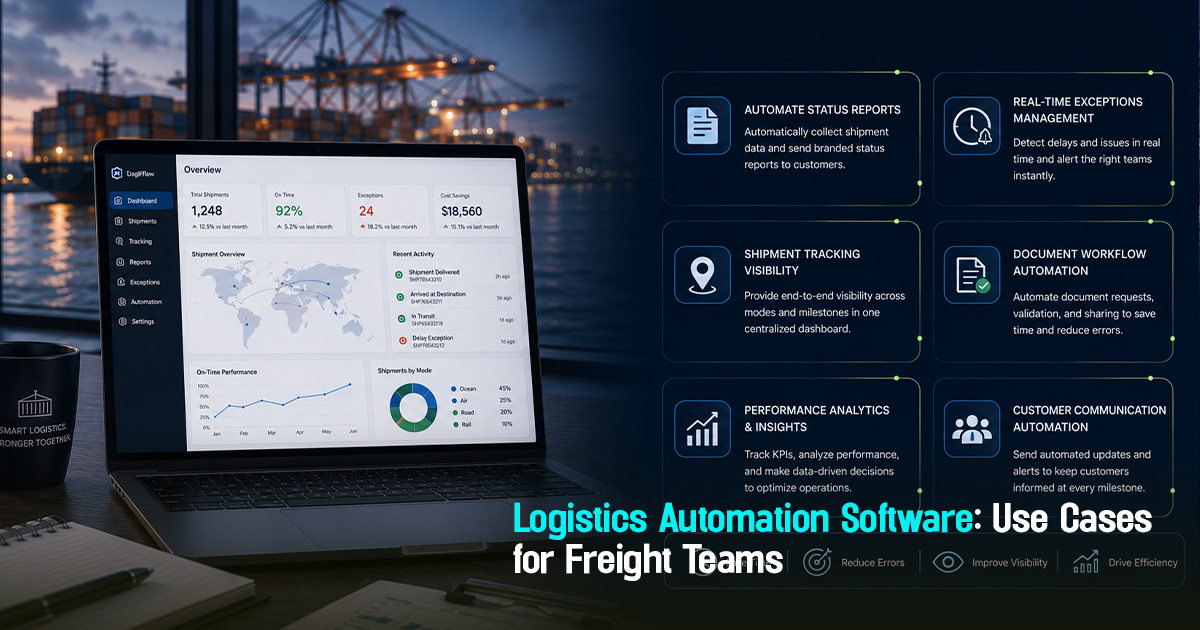
Logistics Automation Software: Use Cases for Freight Teams


5 Minutes
Logistics automation software refers to digital tools designed to streamline and control freight operations by automating core tasks like shipment tracking, vendor coordination, documentation management, and exception handling. In freight operations, these solutions matter because they reduce manual follow-ups, minimize errors, and improve visibility across complex, multi-stakeholder workflows. Without automation, logistics teams often struggle with inefficiencies that lead to missed ETAs, documentation delays, and cost overruns. This article presents practical use cases for logistics automation software and explains how freight teams can implement structured workflows to enhance operational clarity and control.
What Is Logistics Automation Software in Freight Operations?
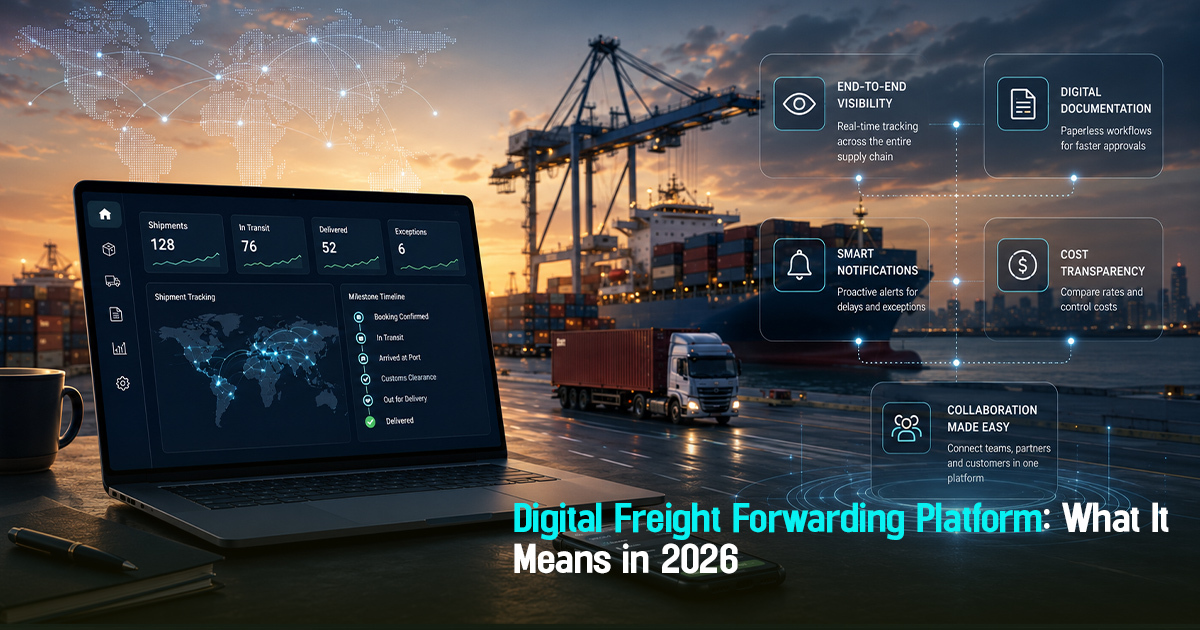
Logistics automation software automates repetitive freight tasks such as centralized shipment tracking, freight procurement workflows, document validation, and carrier coordination. It integrates data across multiple systems to provide end-to-end shipment visibility and enables exception-first workflows.
This software helps freight teams monitor ETA/ETD milestones, manage exceptions proactively, and keep customers updated without manual interventions. It also enforces procurement discipline by enabling quote comparisons, approval tracking, and audit logs. Ultimately, it empowers teams with clear operational control and reduces error-prone manual work.
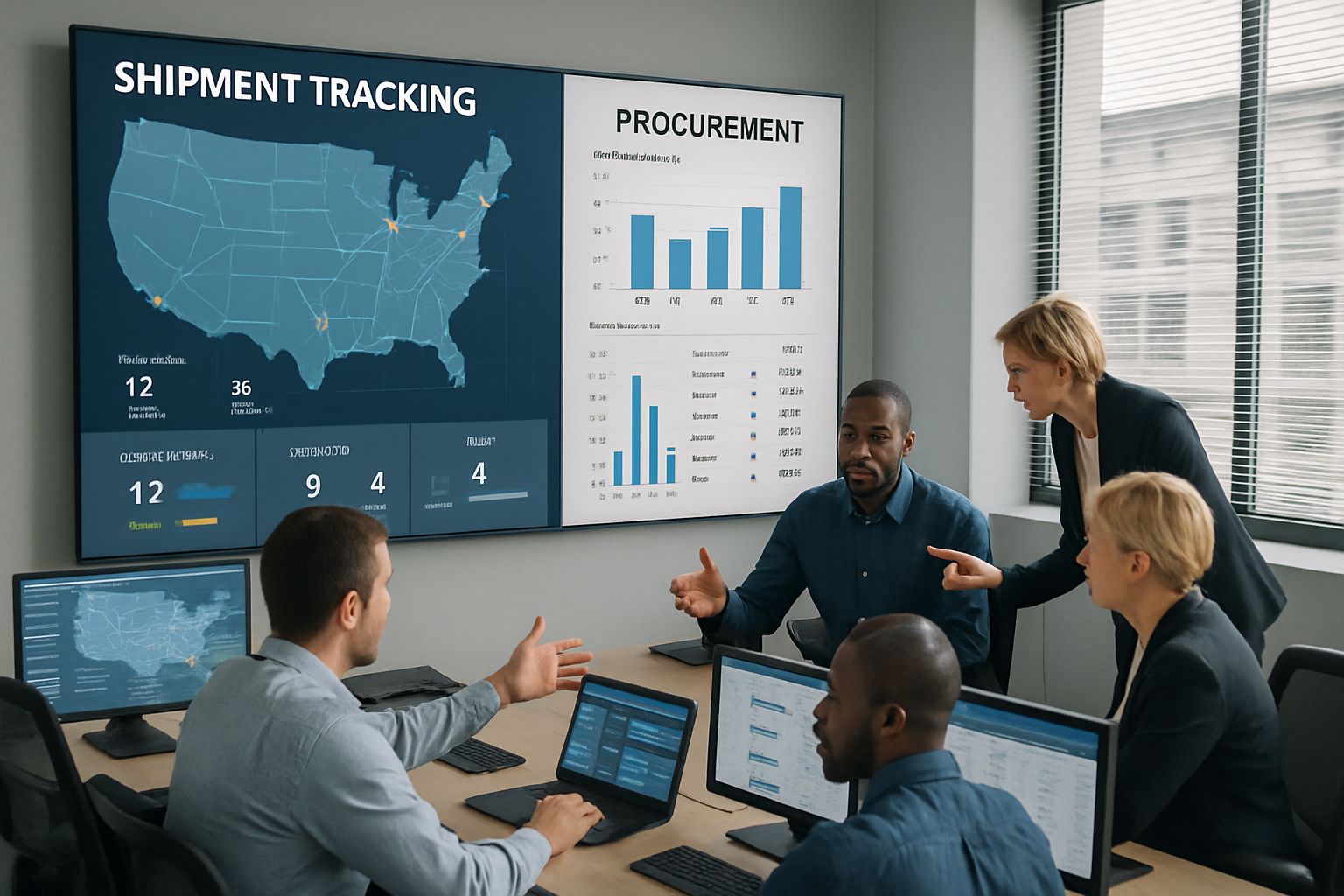
A Practical Workflow Framework for Logistics Automation Software
Implementing logistics automation software involves several interconnected workflow steps that freight teams must adopt for maximum impact. The framework below covers key process areas where automation lifts operational clarity and control.
1. Freight Procurement Automation: Automate rate requests, vendor comparisons, and quote validations.
2. Booking and Documentation Workflow: Streamline booking confirmations, document collection, and handoffs via automated alerts.
3. Centralized Shipment Tracking: Consolidate carrier milestones from multiple sources and monitor ETD/ETA updates.
4. Exception Identification and Handling: Automate alerting and ownership assignment as soon as milestones are missed.
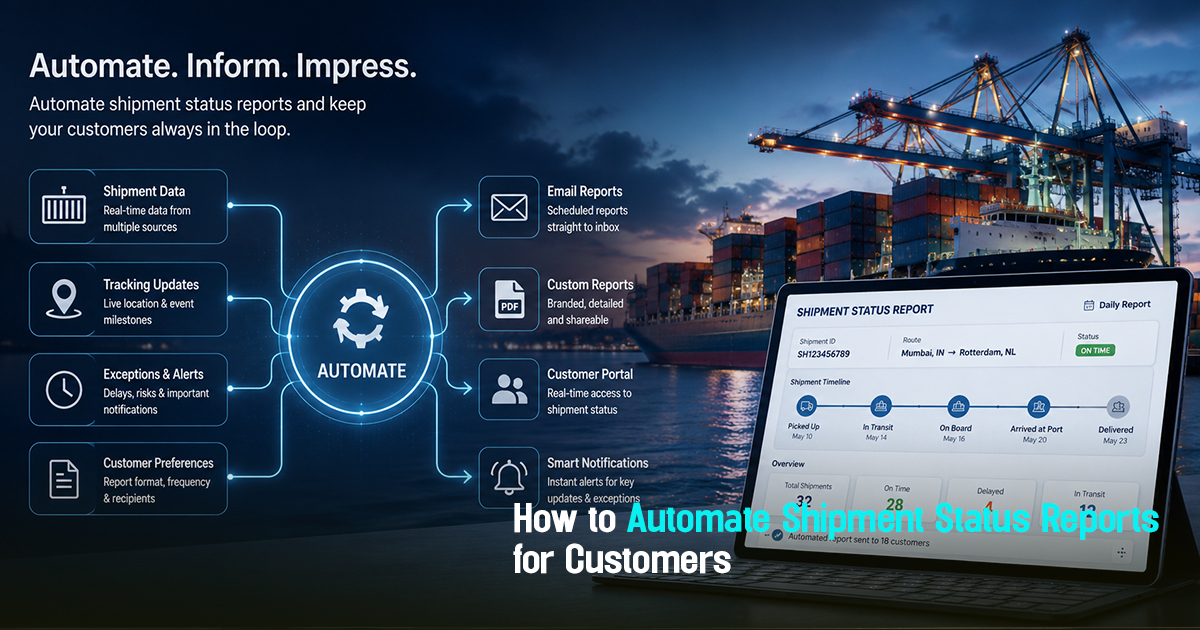
5. Customer Communication Automation: Push proactive shipment status updates based on real-time event changes.
6. Audit and Compliance Control: Record approvals, document validations, and process logs in an auditable system.
7. Operational Analysis and Reporting: Use automated dashboards to review carrier performance and shipment risks.
Role-wise Use Cases of Logistics Automation Software
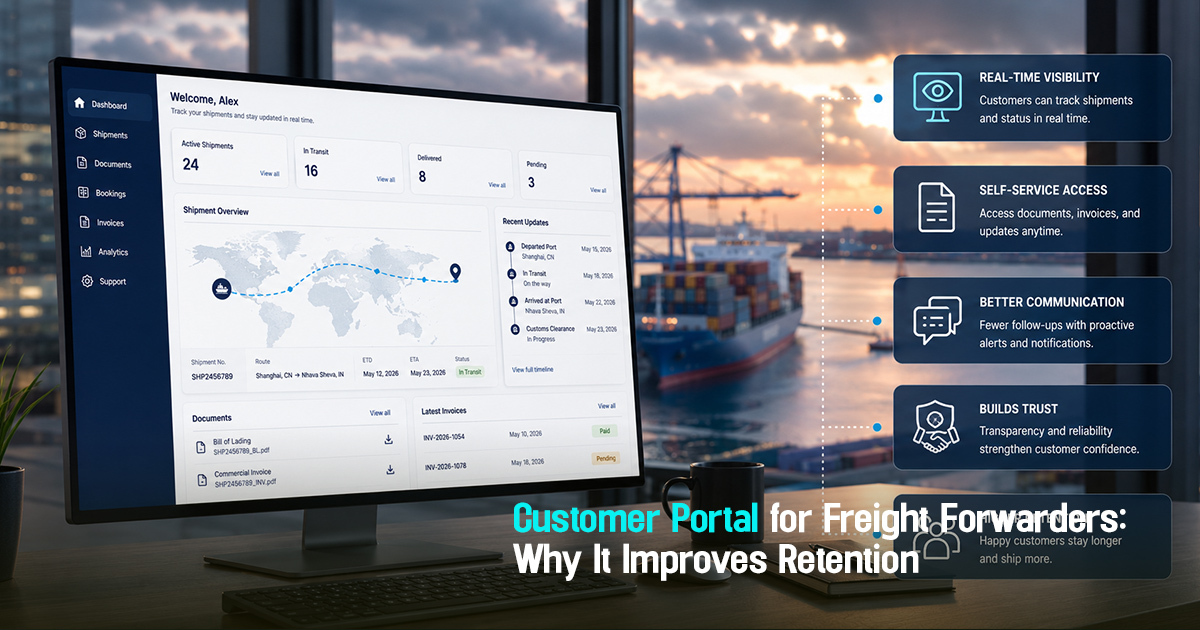
Freight forwarders benefit from automated shipment tracking dashboards and exception alerts that reduce manual follow-ups and improve carrier coordination. This enables them to consolidate multiple carrier portals into one system, cutting response times on delays.
Importers and exporters gain enhanced transparency with automated status reports and ETA tracking that keep their supply chain teams and customers informed. Automation of documentation workflows reduces customs clearance delays and missing paperwork.
Operations teams use automated milestone tracking and exception ownership to prioritize critical shipments and prevent detention or demurrage costs. This operational clarity reduces chaos in high-volume shipments and prevents information silos.
Procurement and documentation teams utilize freight automation tools to compare vendor quotes systematically, validate accessorial charges, and maintain disciplined approval records that enhance audit readiness and cost control.
Before, During, and After Shipment: Stage-wise Implementation of Automation
Before shipment: Automate rate requests and quote comparisons with freight procurement software, enforce routing validation, and capture approvals centrally before booking confirmation to reduce non-compliance and cost leakage.
During transit: Leverage automated shipment tracking to monitor milestone events and ETD/ETA changes from diverse carriers, trigger exception alerts when delays occur, and prompt ownership assignment for timely resolution. Proactively inform customers about shipment deviations.
After delivery: Automate post-shipment reviews including carrier performance analysis, cost variances, and exception closure documentation. Use these inputs to refine procurement decisions and operational workflows.
Freight Operations Examples Demonstrating Automation Benefits
Example 1: A freight forwarder automates the tracking of multiple carriers on one platform, eliminating daily manual portal checks and reducing ETA misses that previously caused costly last-minute customer escalations.
Example 2: An importer uses automated documentation validation to flag missing customs clearance documents before port arrival, preventing detentions and demurrage charges.
Example 3: A procurement team centralizes vendor quote comparisons and enforces approval workflows, catching hidden accessorial fees and standardizing routing decisions, significantly lowering freight cost leakage.
Automation turns complex freight data into actionable visibility, reducing delays and follow-ups through clear ownership.
Practical checklist
Logistics teams should verify that their automation software and workflows include these checks to secure operational benefits:
- Is centralized shipment tracking consolidating multiple carrier milestones and ETD/ETA updates?
- Are exceptions automatically identified when milestones slip, and is ownership assigned promptly?
- Are vendor quotes compared with all accessorial charges included before approval?
- Is booking confirmation linked to documentation workflows with automated handoff alerts?
- Are proactive customer shipment alerts configured for key exceptions and milestone changes?
- Is auditability maintained with timestamped approvals, document validations, and communication logs?
- Are operational dashboards available to review shipment risks and carrier performance consistently?
- Are manual follow-ups reduced through automated status reports and centralized updates?
- Is documentation compliance tracked with automated checkpoint validation before customs clearance?
- Are workflow bottlenecks such as exception resolution times and communication delays monitored regularly?

Common mistakes
1. Fragmented tracking across multiple carrier portals: This causes visibility gaps and manual data consolidation delays. Fix: Consolidate tracking into one automated platform integrated with carrier APIs to centralize milestones and ETA updates.
2. Ignoring accessorial charges in procurement automation: Leads to unexpected freight costs. Fix: Enforce quote validations that require detailed cost breakdowns before approval and booking.
3. Lack of exception ownership assignment: Missed milestone alerts without clear owner create follow-up chaos. Fix: Configure automation to assign exceptions to specific team members immediately upon detection.
4. Delayed documentation handoffs and validation: Customs clearance and delivery delays increase with manual, untracked processes. Fix: Automate document collection reminders and validation steps aligned with shipment schedule.
5. Poor customer communication due to lack of automation: Resulting in escalations and lost trust. Fix: Use automated customer notifications triggered on shipment exceptions and ETA changes to build confidence.
A Frayto-aligned workflow for logistics automation
A typical automation workflow integrating key freight functions looks like this: Rate Request → Vendor Comparison → Approval → Booking → Automated Shipment Tracking → Exception Handling and Customer Updates → Documentation Validation and Audit. Each step is driven by data flowing through a centralized system enabling operational clarity and accountability. For instance, when a shipment milestone is missed, an automated exception alert is triggered, assigned to an operations user, and a customer-facing update is sent proactively, preventing follow-ups and reducing delays. Procurement approvals are digitally recorded, ensuring cost control and audit readiness.
This structured approach reduces manual silos, improves decision timing, and helps freight teams manage complex workflows efficiently, reflecting the core principles of practical freight clarity.
Frequently Asked Questions
Get in Touch!
We'll reach out shortly with the info you need. No spam, just a helpful conversation.
Freightstory Technologies Private Limited
A-209, Dynasty Business Park, JB Nagar,
Andheri East, Mumbai- 400059, India


For Exporters & Importers
For Freight Forwarders
© 2026 Frayto. All Rights Reserved.