


Solutions
For Exporters & Importers

For Freight Forwarders and Logistics Service Providers
Freight Procurement vs Freight Management: Understanding the Operational Differences


4 Minutes
Understanding the difference between freight procurement vs freight management is essential for logistics and supply chain teams to optimize operations and control costs effectively. While these terms are often used interchangeably, they represent different stages and responsibilities in freight workflows. Clarifying these differences improves operational decision-making, streamlines workflows, and reduces the risk of delays, cost overruns, and compliance issues.
What is freight procurement and freight management?
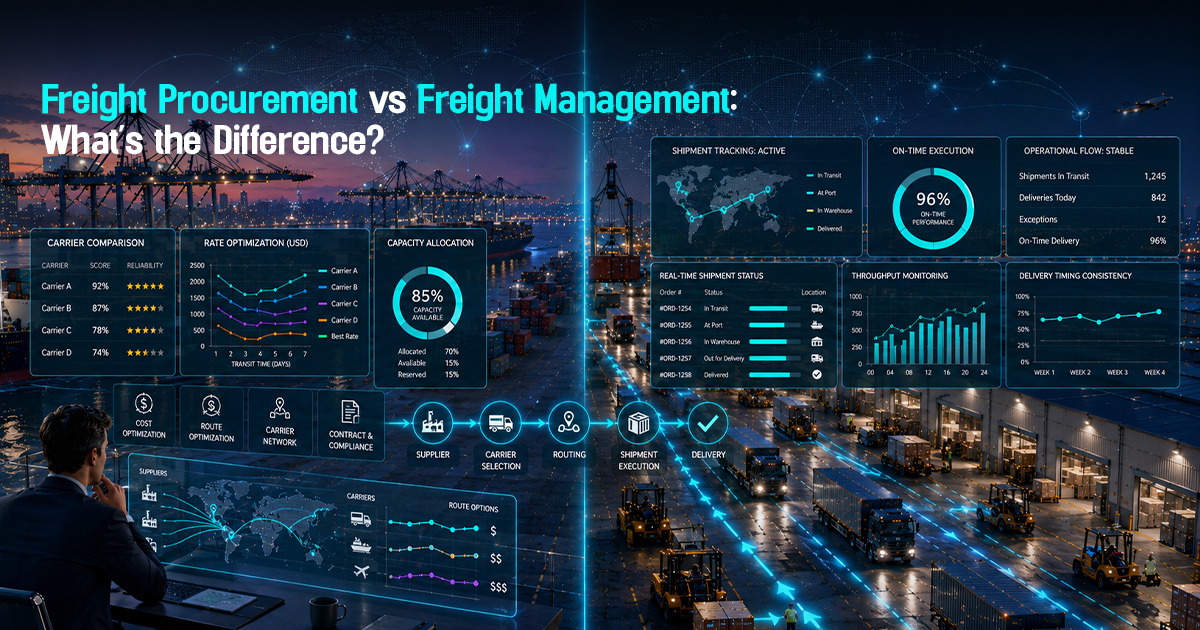
Freight procurement is the process of sourcing, negotiating, and contracting with carriers or freight providers to secure transportation services at the best possible cost and terms. It involves rate discovery, bidding, vendor comparison, and contract compliance. Freight management, on the other hand, refers to the ongoing operational handling of freight shipments including booking, tracking, vendor coordination, documentation, and exception resolution.
Effective freight procurement sets the stage for smooth freight management, but excellent execution of both is critical to maintain shipment visibility, control costs, and meet delivery timelines. Organizations with clear distinctions between these functions experience less operational friction and better freight cost optimization.

Key stages in freight procurement and freight management processes
The freight procurement process typically includes market analysis, requesting proposals, comparing bids, negotiating contracts, and finalizing agreements with carriers. This phase focuses on establishing reliable, compliant freight partners and optimizing long-term costs.
Conversely, the freight management process covers shipment booking, document handling, visibility monitoring, exception handling like delays or demurrage, and carrier follow-up. This operational stage demands real-time coordination and clear communication to avoid costly disruptions.
Why distinguishing between procurement and management matters
Differentiating these functions helps organizations assign clear ownership, apply the right tools, and focus teams on their specific objectives. Freight procurement strategy emphasizes cost control, supplier performance, and contract auditability. In contrast, freight management prioritizes shipment execution, timely communication, and exception resolution.
Without clear boundaries, teams can struggle with duplicated effort, missed follow-ups with carriers, documentation delays, and unclear accountability — all leading to freight cost escalation and poorer customer service.
Clear separation between procurement and management reduces errors and improves freight cost control.
Comparing freight procurement and freight management workflows
Freight procurement workflows are cyclical and periodic, typically aligned with contract periods. Activities include issuing requests for quotes, supplier evaluations, and contract renewals. They require detailed data analysis and supplier coordination.
Freight management workflows are continuous and event-driven, centered on execution. They encompass booking shipments, tracking ETAs, managing exceptions like detention or demurrage, and updating customers with shipment status.
Practical checklist
To differentiate and optimize your freight procurement and freight management functions, use this checklist:
- Freight Procurement: Establish clear sourcing criteria, benchmark market rates, document negotiation outcomes, audit supplier compliance, and plan contract renewals.
- Freight Management: Maintain up-to-date shipment booking records, monitor real-time tracking and ETA updates, track exceptions closely, coordinate with carriers on issues, and manage accurate documentation flow.
- Joint Actions: Share performance feedback between procurement and management teams, align on cost-control goals, and use centralized freight management tools for end-to-end visibility.
Common mistakes
One common error is treating freight procurement and management as a single process, leading to unclear responsibilities and dispersed accountability. Another frequent mistake is insufficient visibility during freight operations management, resulting in reactionary rather than proactive handling of exceptions.
Many teams also overlook the importance of aligning freight procurement strategy with operational realities, causing miscommunication with carriers and ineffective cost optimization. Additionally, lack of standardized documentation handoffs can cause compliance delays and increased detention or demurrage risks.
How technology supports both functions
Digital freight procurement solutions centralize bidding, rate comparisons, and contract auditing, enabling clearer supplier selection based on data. Meanwhile, logistics freight management platforms enhance shipment visibility, milestone tracking, and exception workflows, improving operational control.
Integrated technology connects procurement and management seamlessly, reducing manual errors, supporting compliance checks, and improving decision timing for cost savings across the supply chain. This unified approach prevents handoff gaps and improves freight cost optimization significantly.
Best practices for balancing procurement and management efforts
Align freight procurement and freight management teams around shared KPIs such as on-time delivery rates, carrier performance, and cost per shipment. Facilitate regular communication channels to bridge insights from contract terms to operational conditions.
Implement structured workflows that highlight visibility milestones, set clear exception escalation protocols, and enable real-time vendor coordination. Prioritize auditability in procurement while adopting a proactive exception-first approach in freight management.

Conclusion
In logistics, distinguishing between freight procurement vs freight management is critical for operational clarity and cost control. Procurement focuses on securing competitive rates and reliable carriers through structured bidding and contract management, while freight management ensures smooth execution by tracking shipments, handling exceptions, and coordinating vendors in real time. Aligning these functions through clear workflows, shared accountability, and integrated technology reduces delays, prevents cost overruns such as detention or demurrage, and improves overall freight operations management. Teams that adopt this approach benefit from stronger shipment visibility, better compliance discipline, and more effective vendor relationships. For supply chain decision-makers, investing effort into optimizing both procurement and management workflows is a practical step toward sustainable freight cost optimization and operational excellence without unnecessary complexity or manual workarounds. Reference materials from UNCTAD, Drewry, and Trade.gov support this operational perspective.
Get in Touch!
We'll reach out shortly with the info you need. No spam, just a helpful conversation.


Freightstory Technologies Private Limited
A-209, Dynasty Business Park, JB Nagar,
Andheri East, Mumbai- 400059, India


For Exporters & Importers
For Freight Forwarders
© 2026 Frayto. All Rights Reserved.