


Solutions
For Exporters & Importers

For Freight Forwarders and Logistics Service Providers
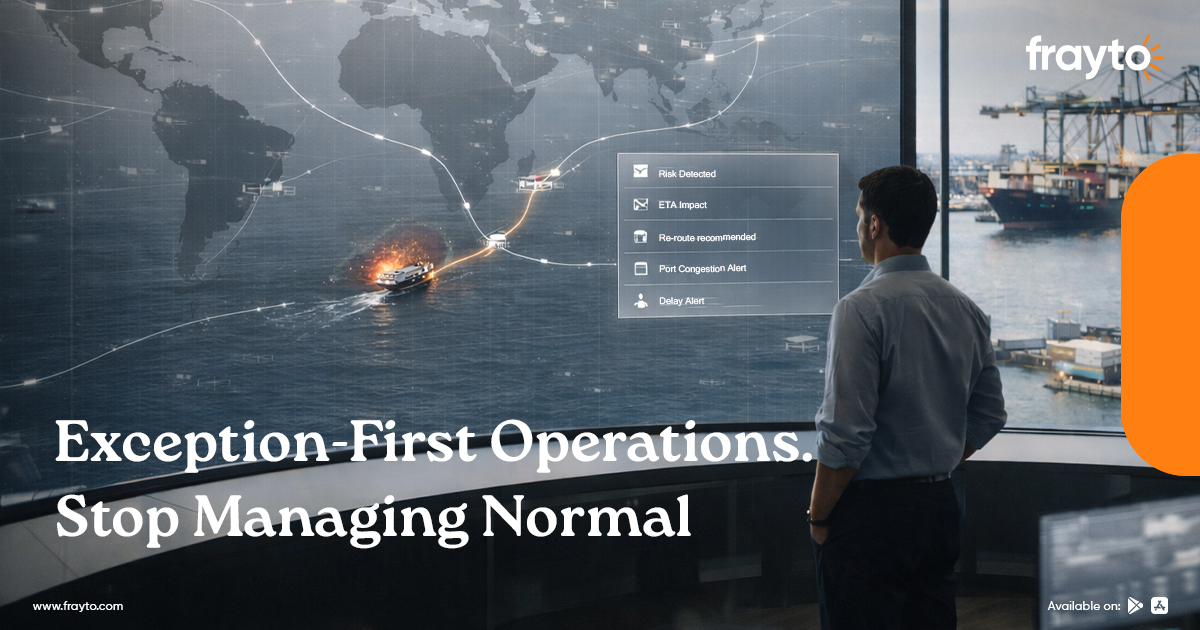
Exception-First Operations: Stop Managing Normal


min read
The traditional approach in freight operations often dedicates disproportionate effort to routine, smooth shipments, leaving exception handling reactive and fragmented.
Rethinking the operational focus
Shifting to an exception-first operational model means prioritizing attention and resources on shipments experiencing deviation from plan rather than normal flows. This strategy requires an understanding of which exceptions impact cost and timelines most to allocate efforts accordingly in a focused, risk-driven manner.
Logistics teams, especially in freight procurement and shipment tracking, can benefit from early identification of exceptions like missed ETD/ETA, detention risks, or documentation errors. This proactive focus frees capacity from supervising routine shipments and improves the capacity to respond to supply chain disruptions in a timely and visible way.
Defining normal versus exceptions
A crucial step is establishing clear criteria for what constitutes normal shipment progress using data points such as confirmed bookings, on-time customs clearance, and scheduled ETAs. Anything outside these agreed parameters becomes an exception that demands immediate attention.
For example, an unplanned delay in vessel departure or an unexpected change in container routing triggers exception workflows, increasing visibility for operations managers. This helps mitigate downstream risks by addressing deviations before they escalate, embedding discipline in daily monitoring routines.
Impact on freight procurement cycles
In freight procurement, exception-first means focusing on contract and rate management issues such as carrier non-performance or sudden surcharges, rather than routine rate confirmations. This promotes cost control and compliance discipline by automatically flagging discrepancies in operational timelines and pricing as exceptions.
Procurement teams can implement exception dashboards monitoring factors like demurrage triggers or deviation from agreed service levels. Failing to address these exceptions promptly often results in unbudgeted expenses and strained carrier relationships, hindering overall freight spend optimization.
Improving shipment tracking and visibility
Exception-first operations require reliable, real-time data streams to identify shipping anomalies instantly. Integrating tracking updates with procurement and operational systems enables rapid detection of issues like missed vessel schedules or customs delays, highlighting critical exceptions in near real-time.
This improved visibility allows logistics heads and operations managers to focus on actionable exceptions instead of monitoring every shipment constantly. For instance, an alert on a delayed bill of lading upload can prompt immediate intervention to avoid clearance hold-ups, driving calm, data-led exception management.
Exception workflows and resolution timing
Establishing structured workflows for exception resolution is critical to limit disruptions. This involves setting clear roles, escalation timelines, and communication protocols prioritizing exception resolution speed over routine status checks in a coordinated chain of accountability.
Examples include automated escalation of delayed shipments beyond pre-defined ETAs or instant notification of customs holds to compliance teams. This approach reduces the risk of unnoticed delays evolving into costly demurrage or loss of cargo, reinforcing timely and accountable exception management.
Technology enabling exception focus
Digital solutions, such as dashboards aggregating operational data, enable exception-first freight management by filtering normal shipment data from anomalies requiring intervention. Cloud platforms with configurable alerts provide a framework for exception triage and prioritization in complex, global freight operations.
Adopting such tools allows logistics teams to reduce manual data review and focus their decision-making bandwidth on significant exceptions, directly impacting cost control and improving on-time delivery through visibility-first workflows.
Benefits for risk management
Exception-first operations underpin a more robust risk management approach by enabling early detection and mitigation of transportation risks such as delays, cargo damage, or compliance breaches in a pre-emptive operational stance.
Mitigating risks before they result in supply chain interruptions requires constant visibility into exceptions like ISO container damage alerts or shifts in regulatory requirements. This method delivers improved control over freight disruptions and supports informed decision-making by logistics heads.
Practical checklist
Start by defining clear exception criteria aligned with shipment lifecycle milestones—ETDs, ETAs, customs clearance, and document validation. Implement automated alert systems to capture and communicate exceptions promptly.
Next, design responsibility matrices and escalation procedures covering exception resolution timelines. Incorporate exception dashboards into existing freight management systems to enable real-time operational clarity and exception trend analysis.
Common mistakes
One common error is treating exception management as an add-on rather than integrating it into daily freight workflows, resulting in missed or delayed responses to critical issues. Another is over-monitoring normal shipments, significantly wasting operational effort on non-value areas.
Also, insufficient data quality and lack of defined exception parameters can cause alert fatigue or false positives, undermining trust in monitoring tools. Avoiding these mistakes requires disciplined exception governance and continuous process refinement.
Scaling exception-first in global operations
Scaling this approach across diverse trade lanes demands harmonized standards for exception definition combined with regional flexibility for unique operational realities, such as customs regimes or carrier capacities. This fosters a consistent global operational framework with localized exception management.
A global platform aggregating exception data and performance metrics supports comparative analysis, enabling continuous improvement in procurement decisions and operational interventions, which drives a more controlled and efficient global freight ecosystem.
Conclusion
In freight and logistics operations, embracing an exception-first operational mindset offers clear advantages by concentrating efforts on the most impactful disruptions rather than routine, uneventful shipments. This shift enables improved resource allocation, earlier risk mitigation, and enhanced operational visibility that are critical in managing complex global supply chains. The practical implementation requires disciplined exception criteria, structured escalation paths, and technology-enabled workflows that support rapid decision-making. As a clear operational takeaway, logistics leaders should prioritize integrating exception-first principles within freight procurement and shipment tracking systems to reduce costs and improve service reliability. By stopping the exhaustive management of 'normal' and focusing on meaningful deviations, organizations can achieve greater clarity and control over their freight operations.
Get in Touch!
We'll reach out shortly with the info you need. No spam, just a helpful conversation.



Freightstory Technologies Private Limited
A-209, Dynasty Business Park, JB Nagar,
Andheri East, Mumbai- 400059, India


For Exporters & Importers
For Freight Forwarders
© 2026 Frayto. All Rights Reserved.